Blackjack Sites in New Zealand: Rules and Features
 Available in US
A practical guide to comparing online tables, understanding decisions and checking the terms that shape real-money play.

Table of Contents
- How Blackjack Rules Shape the Game
- What to Check When Comparing Blackjack Websites
- How Live-Dealer Blackjack Plays Online
- How Online Blackjack Software Changes the Pace
- Real-Money Blackjack: Payouts and Wagering Terms
- Card Counting and the Limits of Online Play
- How Blackjack Variants Change the Decisions You Face
- Table Actions, Insurance, and Responsible Play
- Deck Count and Single-Deck Blackjack
- Bitcoin Searches and What You Can Verify
How Blackjack Rules Shape the Game
Blackjack is a contest between you and the dealer. Your aim is to finish with a hand value closer to 21 than the dealer’s, without going over 21 yourself. You are not trying to beat the other people at the table: their hands do not determine whether yours wins or loses.
The card values make the total straightforward to calculate. Number cards count at face value, while each king, queen or jack counts as 10. An ace can count as either 1 or 11, depending on which value helps the hand without taking it above 21. That flexibility means the same cards can support different decisions as a hand develops.
For instance, an ace with a card worth 6 can be counted as 7 or 17. If you take another card, the ace can be treated as 1 if counting it as 11 would push the total over 21. A hand containing an ace is therefore not always fixed at one value: its useful total may change as you draw. This is why looking only at the current total, without considering the ace, can give you an incomplete picture.
Choosing a blackjack site in New Zealand is easier when you can check the available licensing details and payout information before deciding where to play. Use these short verdicts as a reference point for your own review.
License: Tobique Gaming Commission, licence no. 0000002 Ricky Casino lists a Tobique Gaming Commission licence, number 0000002. You can use that detail as a starting point when checking its licensing information.
License: Curaçao Gaming Authority, licence no. OGL/2024/165/0185 BitStarz lists a Curaçao Gaming Authority licence, number OGL/2024/165/0185. Check the licence details as part of your review.
License: 07017519840 · Payout speed: 1-3 business days Zotabet lists licence number 07017519840 and states a payout speed of 1–3 business days. These are the available details to consider when reviewing the site.
License: Tobique Gaming Commission, licence no. 0000091 7Bit Casino lists a Tobique Gaming Commission licence, number 0000091. You can refer to this information when checking its licensing.
Payout speed: 1-3 business days Lamabet states a payout speed of 1–3 business days. That is the available specific detail to factor into your review.
License: Malta Gaming Authority, licence no. MGA/B2C/370/2017 Play Grand lists a Malta Gaming Authority licence, number MGA/B2C/370/2017. You can check this licensing detail as part of deciding whether the site suits you.
License: Malta Gaming Authority, licence no. MGA/B2C/394/2017 N1 Casino lists a Malta Gaming Authority licence, number MGA/B2C/394/2017. This gives you a specific licensing detail to check when reviewing the site.
Payout speed: 1-3 business days Wintino states a payout speed of 1–3 business days. You can use this information as one point of reference when considering the site.
License: Tobique Gaming Commission, licence no. 0000064 Neospin lists a Tobique Gaming Commission licence, number 0000064. You can check this detail as part of your review of the site.
The choices you control
After receiving a hand, you choose whether to take another card or keep the total you have. The main actions are hit, stand, double down and split. Which actions are available at a particular point depends on the situation and the table rules.
A hit means asking for another card. It can move a low total closer to 21, but it can also take your hand over 21. A stand means keeping the hand as it is and taking no more cards. The decision is a trade-off: another card might improve your position, while stopping avoids the risk of adding to the total.
With a double down, you increase your wager in exchange for a restricted next step, commonly receiving one more card before the hand is finished. Because this option limits what you can do afterwards, it is not simply another way to hit. You are choosing to commit more while giving up the chance to keep drawing.
A split can be available when your first two cards have the same value. It separates them into two hands, each played on its own. That creates more decisions, and it can also mean more than one hand is exposed to the result of the dealer’s play. Whether splitting is allowed, and how it works afterwards, depends on the table’s rules.
These actions do not change the aim of the game. They change how you manage the chance of improving your hand against the chance of going over 21. A decision that seems attractive with one total may be poor with another, because the value of taking a card depends on what you already hold and on the rules governing the hand.

The dealer is the other side of the contest
Your hand is only one part of the result. The dealer plays the opposing hand, and the comparison between the two determines which side finishes closer to 21 without exceeding it. A strong total for you does not by itself describe the outcome; the dealer’s hand matters too.
This structure also explains why blackjack is not a game of choosing a single action in advance. You assess the hand you have, consider what each available action changes, and make a decision at each point where the rules allow one. If an action
What to Check When Comparing Blackjack Websites
A blackjack website can offer several tables with different rules, so comparing sites by name alone tells you little about the game you would actually play. A useful comparison starts at table level: identify the rules attached to each game, then decide whether those conditions suit the way you want to play. A ranking without that detail cannot show whether one option is better for your priorities.
Start with the rules displayed for the table. Check how many decks are used, whether the dealer draws or stands on soft 17, whether surrender is allowed, and what payout applies to a natural blackjack. These conditions can differ between games. A specialist review has reported variation in these areas, but a single review should not be treated as proof of a market-wide pattern or as a guarantee that a particular table still has those rules. Confirm the details in the game information before relying on them.
Table Comparison Checklist
- Check the number of decks used
- Verify if the dealer draws or stands on soft 17
- Confirm if surrender is allowed
- Identify the payout for a natural blackjack
Compare like with like
When assessing blackjack sites in New Zealand, compare equivalent games rather than broad site descriptions. If one table allows surrender and another does not, or their dealer rules differ, the results of a comparison may reflect those rule differences rather than any overall quality difference between the websites. Likewise, a payout label is meaningful only when you know which blackjack outcome it describes and which table it applies to.
This is why the table’s own rule sheet matters. Look for the rules before you begin, and check that they refer to the game you have selected. A general description of a website may cover its blackjack selection without specifying the conditions of every table. If a rule is unclear, do not infer it from the game’s title or from a description of another table.
You can make a simple comparison record with one row per table and columns for deck count, dealer action on soft 17, surrender availability and natural-blackjack payout. Leave a field blank if the rules are not stated clearly; an unconfirmed detail is not a point in that table’s favour. This also prevents a familiar game name from obscuring a rule difference.
Judge details against your priorities
The best blackjack websites are not necessarily those with the most tables or the strongest claims in their descriptions. “Best” depends on which conditions you value. You might prefer a table with a clearly stated set of rules over one whose details are difficult to find. Or you might want to compare a specific dealer rule across several tables. In either case, decide what matters first, then compare the available games on that basis.

Do not treat the number of listed tables as evidence that their rules are more favourable. A larger selection can provide more choice, but it does not by itself tell you how any individual game is configured. Nor does a polished presentation establish the payout or rule conditions. Those need to be checked directly against the table information.
A practical comparison therefore has two stages. First, verify the rules for each candidate game. Then compare only tables whose conditions you understand, giving greater weight to the rules that affect your decisions. If the information is absent or contradictory, set that table aside rather than filling the gap with an assumption.
This approach is more useful than relying on a general verdict about the best blackjack sites. It gives you a reason for choosing one game over another, and it makes the comparison repeatable: if the table rules change, you can reassess the same criteria instead of relying on an old ranking.
How Live-Dealer Blackjack Plays Online
Live-dealer blackjack is streamed from a table where the game uses actual cards. You watch the dealing through a video feed and make your decisions through the online interface. The format is intended to resemble play at a casino table, but the stream adds a layer between the table and your screen: the cards are dealt in one place, while you observe and respond remotely.
Live-dealer blackjack is streamed from a physical table where actual cards are dealt, creating a visual record of the hand through a video feed.
That separation affects the rhythm of a hand. You need to watch the stream and use the interface to act, rather than simply seeing a software-run game update immediately on your screen. A delay in the video can make the action feel less immediate. If the feed pauses or lags, you may have less time to follow what is happening before you need to decide. The practical point is not that every stream will be delayed, but that live play depends on a video connection in a way that a game generated entirely on your device does not.
The actual cards are the defining feature of the format. The dealer handles them at the table, and the stream shows the play as it unfolds. This gives you a visual record of the hand rather than an animation generated by blackjack software. It does not remove the need to understand the table’s rules or make your own decisions; the live format changes how you observe the game, not the basic aim of blackjack.
Bet requirements are another practical difference. Live tables may require higher bets than you are prepared to make. Check the stated minimum before joining, and do not treat the presence of a live table as a reason to stretch your budget. If the available stakes do not fit what you have set aside, choosing a different format or not playing is more consistent than increasing your intended spend.
When considering a live blackjack site, separate the attraction of the streamed table from the conditions of play. Ask whether you are comfortable with a video-based pace and whether the listed bet level fits your budget. Also check the table rules before you begin: the streamed format does not mean every table plays under identical conditions. Those details determine how a hand works, while the live feed determines how you watch it.
A useful way to assess the format is to notice what it gives you and what it asks of you. You see actual cards dealt at a table, which can make the game feel closer to an in-person casino session. In return, you depend on a working stream and may face higher bet requirements. Neither feature makes live blackjack automatically better than other online play. The fit depends on whether seeing real cards matters to you and whether the pace and stakes are acceptable.

If you are comparing live tables, read the information shown for the specific game rather than assuming that all streamed blackjack is alike. Confirm the rules and the required bet, then consider whether a video stream suits the way you want to play. That gives you a practical basis for choosing a table without relying on a broad claim that one live blackjack website is best for everyone.
How Online Blackjack Software Changes the Pace
In software-run blackjack, a random number generator (RNG) determines the card sequence. The game does not depend on a dealer physically shuffling and dealing cards for each hand: software handles the shuffle, then displays the result and processes your decisions. This makes the online format operate differently from a streamed table, where cards are handled in view of a live dealer.
The main practical effect is speed. An RNG game can move from one hand to the next as soon as the current hand is settled and you choose to continue. There is no need to wait for a dealer to collect cards, prepare the next deal or complete a stream. You control the pace more directly, although the game still follows its programmed sequence of actions.
That shorter cycle changes how long a session can feel. If you make decisions quickly, hands can follow one another with little interruption. A live-dealer game has pauses built into its physical dealing and broadcast, so the same stretch of play takes longer. The software format can therefore feel more immediate, but faster play also means you may make more decisions in the same period. The pace is a property of the format, not evidence that one hand is more favourable than another.
The screen presents each hand, the dealer’s cards and the controls for your available actions. You select an action, and the software applies it before showing the next state of the hand. This removes some of the waiting associated with a streamed game, but it also means you are interacting with a programmed interface rather than watching each card handled at a table.

Speed is not the same as simplicity. You still need to understand what each action does and how the table’s rules affect the result. A rapid interface can make it easy to continue without pausing to consider a decision. If you want to play deliberately, take the time to review the hand before selecting an action, even when the software is ready to proceed immediately.
RNG blackjack is also distinct from a live broadcast in how the cards are generated. The software uses shuffles rather than relying on a dealer’s visible handling of actual cards. That mechanism explains why the game can run more quickly; it does not mean that the outcome of a hand can be inferred from the speed of the animation or the sequence shown on screen.
When choosing between formats, focus on the experience you want from the play itself. Software-run blackjack suits a shorter decision cycle, with fewer pauses between hands. A live table has the slower rhythm of dealing and streaming. Neither format changes the basic purpose of blackjack, but the pace can affect how you manage your attention and how quickly a session progresses.
If you are comparing an online blackjack game with a streamed table, treat pace as a practical feature rather than a quality score. A fast game gives you less built-in downtime; a slower one gives each hand more time to unfold. The useful question is whether that rhythm helps you stay attentive. If you find yourself clicking through hands without considering your choices, slowing down or ending the session is more sensible than treating speed as an advantage.
Real-Money Blackjack: Payouts and Wagering Terms
When you play for money, the amount returned for a natural blackjack depends on the table’s payout rule. A specialist review reports that some tables pay 3:2, while others pay 6:5. Check the rule shown for the specific game rather than assuming that the payout is the same across every table or website.
- Verify the specific natural blackjack payout (e.g., 3:2 vs 6:5)
- Read the full bonus wagering requirements
- Check maximum-bet rules for bonus eligibility
- Assume payouts are the same across all tables
- Rely on general promotion summaries
- Increase your budget to recover losses
The ratio determines how the blackjack payout relates to your original wager. A 3:2 payout returns more profit for a natural blackjack than a 6:5 payout on the same wager. That difference applies to this particular outcome; it does not mean you will receive the stated ratio on every winning hand. Ordinary winning hands are settled under the table’s rules, and a natural blackjack is a distinct result. Read the game rules to see how it is defined and paid.
A bonus can add another layer of conditions. The displayed offer is not enough to tell you how blackjack affects its wagering requirements: the terms may treat blackjack differently from other games. Before accepting an offer, find the rules that explain which games count, how they count, and whether any conditions apply while you wager. If the terms do not make blackjack’s contribution clear, do not assume that every wager on the game will count in the same way.
Pay particular attention to maximum-bet rules during wagering. A bonus may restrict the size of a wager while its requirements are being met. If you exceed the stated maximum, the terms may affect your eligibility for the bonus or related winnings. Check how the rule is applied to blackjack bets, including whether it applies only while wagering requirements remain outstanding. Do not rely on a general promotion summary when the detailed conditions govern the offer.
Separate the value of the table from the value of the bonus. The table payout tells you how a natural blackjack is settled; bonus terms tell you what conditions attach to promotional funds and associated wagering. Neither changes the other automatically. A generous-sounding offer cannot compensate for an unfavourable table payout by itself, and a preferred payout rule does not remove bonus restrictions.
Before you play, read the table’s payout information and the full bonus conditions, including wagering requirements and maximum-bet rules. Set a budget that you can afford to lose, and do not increase it to recover losses. Treat any bonus as conditional rather than as cash you can use without restrictions. These checks let you understand what a winning hand pays and what obligations, if any, come with an offer before you place a wager.
Card Counting and the Limits of Online Play
Card counting is a way to estimate how the remaining cards are distributed by keeping track of cards that have already appeared. It does not reveal the next card or guarantee a winning result. Its usefulness depends on whether information from earlier cards still describes the cards that may be dealt later.
In New Zealand, doing this mental arithmetic is not illegal. That legal point is narrow: it concerns the act of calculating a count in your head. It does not establish that counting will produce an advantage, make a particular blackjack game suitable for it, or guarantee that an operator will offer conditions that preserve the information.
Card Counting Limits
In RNG games, software shuffles may reset the sequence before a count becomes useful, making tracking earlier cards an unreliable basis for estimating the next deal.
The key question for online blackjack is how the cards are handled between deals. In an RNG game, software shuffles the cards. If a shuffle resets the card sequence before earlier results can inform later deals, a running count cannot build a useful picture of what remains. In that situation, the cards you just saw do not provide a dependable basis for estimating the composition of the next deal. Faster software play can also mean that decisions arrive more quickly, leaving less time to maintain and apply a count.
This is why searching for a site that is supposedly ideal for card counting can miss the central issue. The name of a website does not tell you whether past cards remain relevant in the game you choose. You need to understand the game’s shuffle process. A stated card-counting method cannot compensate for a shuffle that removes the connection between earlier and later deals.
A live table may preserve a sequence of dealt cards for longer, but the format alone does not tell you how much information is available. The dealing and shuffle procedures matter. Check the rules and table information where they explain those mechanics; do not infer them from a game’s appearance or from a general claim that it is suitable for counting.
Treat any claim that card counting guarantees profit, or that a particular online table makes counting effective, with caution. Counting is an estimate based on information that may become irrelevant when the cards are shuffled. For software-run blackjack, the shuffle mechanism—not the speed or presentation of the game—determines whether tracking earlier cards can help you assess what may remain.
How Blackjack Variants Change the Decisions You Face
Two blackjack tables can use the same basic objective yet require different choices because their rules are not identical. A variant is not just a different name or visual style: it is a set of conditions that determines which decisions are available and how favourable the game is to the player. Those differences can change both your strategy and the house edge.
Consider surrender. If a table permits it, you may have an option that is unavailable at a table without that rule. Whether surrender is useful depends on the situation and the other rules in force; its presence alone does not make a game better. The same principle applies to doubling down and splitting: the rules of a variant define when those actions can be taken, so a decision that is possible at one table may not be offered at another.
Dealer rules also affect the choices facing you. A table may require the dealer to hit or stand on a soft 17, and that rule can change how you assess a hand. Blackjack payouts matter as well: a change in the return for a natural blackjack affects the value of that outcome, even though it does not change the cards you hold or the decisions available during the hand. These features interact, so it is not reliable to judge a variant from one rule in isolation.
For instance, a rule that appears favourable in one respect may sit alongside another condition that shifts the game in the opposite direction. The combined effect, rather than the variant’s label, is what matters for strategy and house edge. Claims that one named style is automatically superior are therefore incomplete unless they specify the table rules being compared.
When deciding whether a particular version suits you, read its rules before play and identify what differs from the blackjack you know. Check which actions are permitted, what the dealer must do, and how a natural blackjack is paid. Then consider how those conditions would alter your decisions. This is a more useful way to assess a game than relying on a broad description such as “classic” or “premium,” which does not by itself explain the rules.
A site’s presentation cannot tell you whether its blackjack variant offers the conditions you prefer. Focus on the rule set for the specific table, not a general label or an unsupported claim that a particular version is best.
Table Actions, Insurance, and Responsible Play
Your options at a blackjack table depend on its rules, but the main actions are hit, stand, double down, split and, where offered, surrender. A hit takes another card; standing ends your turn. Doubling down increases your wager in exchange for taking a further card, while splitting separates a pair into two hands played independently. Surrender lets you give up a hand under the table’s stated conditions. Check which actions are available before you play, because a decision can be unavailable in some situations or under some rules.
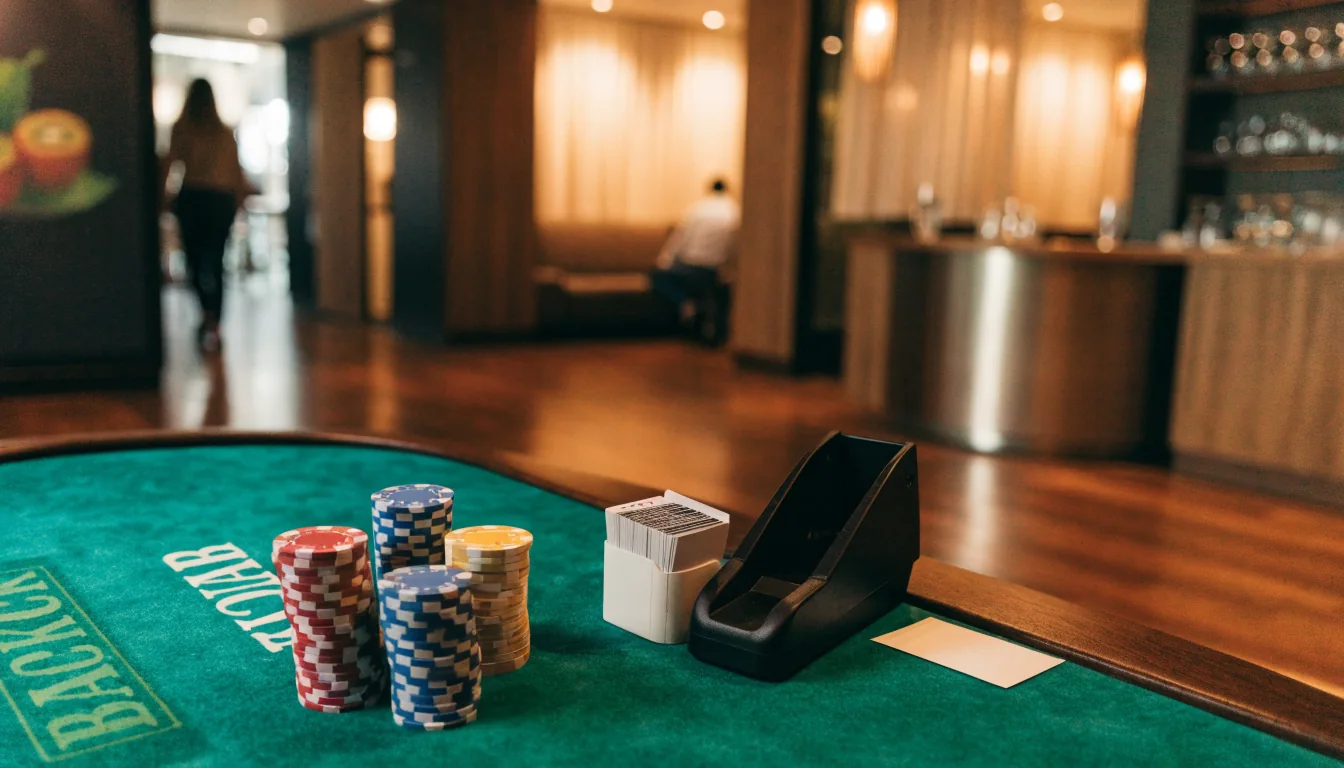
Insurance is a separate wager offered when the dealer’s visible card is an ace. It pays if the dealer has a natural blackjack, but that does not make it a dependable way to protect your main hand. For most players, insurance is generally not a suitable bet: it adds another wager whose outcome is separate from the decisions on the original hand. Consider it only if you understand its terms and have a reasoned strategy for using it, rather than treating it as routine protection.
Responsible play starts before the first hand. Set a budget you can afford to lose, and stop when you reach it. Do not increase your stakes to recover losses: each new hand is another wager, not a way to reverse what has already happened. A run of results does not require you to keep playing, and no betting system can guarantee a win.
If you use a bonus, read its conditions before wagering. Blackjack may contribute differently from other games toward wagering requirements, and maximum-bet rules can apply while those requirements are active. A wager that breaches a condition may affect whether bonus-related terms are met. Check the eligible games, contribution rules and restrictions on play, rather than assuming every blackjack hand counts in the same way.
When weighing different blackjack websites, focus on whether the table rules and terms suit the way you intend to play; a ranked list alone cannot establish that. If you are checking payment options, verify the available methods and any related conditions directly in the operator’s own terms. Do not assume that a particular method is supported or that its use leaves bonus eligibility unchanged.
You can make the safest decision at the table by separating three things: the action available on the current hand, any optional wager such as insurance, and the broader terms attached to your play. Read each before committing money. If you feel pressure to continue or to win back losses, pause rather than placing another bet.
Responsible Play Summary
- Set a budget you can afford to lose and stop once reached
- Understand that insurance is generally not a suitable bet for most players
- Verify that blackjack contributes to wagering requirements before using a bonus
- Distinguish between table actions, optional wagers, and overall account terms
Deck Count and Single-Deck Blackjack
A single-deck table uses one pack of cards rather than several combined packs. That changes the composition of the cards available in the game, but it does not by itself show whether the table is favourable to you. Deck count is one rule to inspect alongside the other conditions attached to that particular game.
A specialist review reports that deck count, the dealer’s action on soft 17, surrender availability and the payout for a natural blackjack can differ between games. Treat those details as a table-specific combination, not as fixed features of every single-deck game. The label tells you how many decks are used; it does not tell you what the dealer does on soft 17 or what payout applies.
This matters when you compare single-deck blackjack on New Zealand casino websites. Two games described as single-deck can still have different rules. If you judge them by the deck count alone, you may overlook a condition that changes how the game plays. Check the displayed rules for the specific table, rather than assuming that the single-deck label guarantees a particular set of terms.
Deck count also needs to be read in context. A game with one deck is not automatically a better choice than a game using several decks. The rest of the rules still determine what decisions are available and how the game responds to them. If you are comparing tables, note the deck count, then verify the dealer’s soft-17 rule, surrender rules and blackjack payout separately. Do not infer one condition from another.
When looking for single-deck blackjack, use the table information as your evidence rather than relying on a site’s general description. The same principle applies when assessing the best blackjack online casino sites: a broad label cannot substitute for the rules of the game you intend to play. If those rules are not clear before you enter a table, you cannot make a reliable comparison based on deck count alone.
Bitcoin Searches and What You Can Verify
Interest in playing blackjack with bitcoin does not establish that a particular website accepts cryptocurrency. A game catalogue and a payment menu are separate parts of a service: seeing blackjack offered tells you nothing about which currencies you can use to fund an account or receive a withdrawal. Check the operator’s own payment information and terms before relying on a third-party description.
Payment terms should make clear whether bitcoin is accepted for deposits, withdrawals, or both, and whether any conditions apply to converting or using funds. Do not assume that a payment method available for one transaction is available for another. If the terms are unclear or conflict with the payment page, treat acceptance as unconfirmed rather than inferring it from a promotional label.
Bonus conditions are a separate check. Read the rules attached to an offer before you claim it, including whether blackjack contributes to wagering requirements and whether maximum-bet rules apply while those requirements are being met. A bonus can change the conditions under which you may withdraw; the payment method alone does not tell you what those conditions are.
Also check what a blackjack payout refers to. A natural blackjack is a two-card hand consisting of an ace and a card worth ten. A specialist review describes a 3:2 payout for that hand, while noting that some tables instead pay 6:5. Treat that as a rule to verify at the specific table, not as a guaranteed feature of blackjack games generally. The payout ratio concerns the return for a natural hand; it does not indicate whether bitcoin is accepted or determine the terms for moving funds.
For a comparison of blackjack options, keep the checks distinct: confirm the table’s stated natural-blackjack payout, then verify payment availability and bonus conditions directly with the operator. A claim about one of these does not verify the others.
Prepared by the Casino Payment NZ editorial staff.