
Speed Roulette in New Zealand: Rules and Odds
 Available in US
A practical guide to live-round cadence, wheel-based bets, zero outcomes, payout comparisons and New Zealand access considerations.

Table of Contents
- What Changes—and What Does Not—in a Live Speed Roulette Game
- The Roulette Wheel Behind the Game
- How Wheel-Based Called Bets Work
- How Zero Changes an Even-Money Bet
- Green Zero and the Mini Roulette Trade-Off
- Using a Roulette Speed Calculator to Compare Payouts
- Why a Betting System Cannot Control the Next Spin
- What to Check While Trying a Speed Roulette Demo
- Roulette Tips for Reading the House Edge
- Online Casino Access and New Zealand’s Licensing Framework
What Changes—and What Does Not—in a Live Speed Roulette Game
A live speed roulette table changes the rhythm of a session, not the underlying chance mechanism. You watch a real game presented through a live stream, while the on-screen interface keeps you informed about the round’s progress. In a faster format, the interval between rounds is shorter, so the game moves on more quickly. That affects how much time you have to observe, decide and pause; it does not make any particular result more likely.
The pace comes from the presentation and the round schedule. A conventional live table may leave more time between one round and the next, while a speed-focused table is designed to reduce that interval. The exact rhythm can depend on the game and its interface. You should therefore treat “speed” as a description of the session’s cadence, not as a promise that every table operates at the same rate or that a result can be anticipated.
This distinction matters because a faster cycle can make a session feel more active than it is mathematically. If rounds arrive close together, you may see many results in a shorter stretch of time. That is a change in how quickly events are presented, not evidence that outcomes have become connected. The stream and interface show the game’s progress; they do not turn a previous result into information about the next one.
If you’re choosing a speed roulette option in New Zealand, the details available for each operator can help you see what is documented before you look further. Use the notes below as a starting point, not as a substitute for checking the terms that matter to you.
License: Tobique Gaming Commission, licence no. 0000002 Ricky Casino lists a Tobique Gaming Commission licence, number 0000002. That licensing detail is the available point of reference for your shortlist.
License: Curaçao Gaming Authority, licence no. OGL/2024/165/0185 BitStarz lists a Curaçao Gaming Authority licence, number OGL/2024/165/0185. This gives you a specific licensing detail to check when considering the site.
License: 07017519840 · Payout speed: 1-3 business days Zotabet lists licence identifier 07017519840 and a payout speed of 1–3 business days. These are the available details to consider for your shortlist.
License: Tobique Gaming Commission, licence no. 0000091 7Bit Casino lists a Tobique Gaming Commission licence, number 0000091. The licence information is the available factual detail for assessing it here.
Payout speed: 1-3 business days Lamabet lists a payout speed of 1–3 business days. That is the available practical detail to note when considering it.
License: Malta Gaming Authority, licence no. MGA/B2C/370/2017 Play Grand lists a Malta Gaming Authority licence, number MGA/B2C/370/2017. You can use this specific licence information as a reference point.
License: Malta Gaming Authority, licence no. MGA/B2C/394/2017 N1 Casino lists a Malta Gaming Authority licence, number MGA/B2C/394/2017. This is the available licensing detail to check as you consider the operator.
Payout speed: 1-3 business days Wintino lists a payout speed of 1–3 business days. This gives you one concrete detail to factor into your consideration.
License: Tobique Gaming Commission, licence no. 0000064 Neospin lists a Tobique Gaming Commission licence, number 0000064. The stated licence is the available factual point of reference here.
Each spin is a separate event. Once a result has occurred, it does not alter the chance of any outcome on a later spin. A run of one colour, a repeated number, or a long gap since a particular result may be noticeable, but none of those observations changes the probabilities governing the next round. The same principle applies whether the table is slow, fast, streamed live or presented in another format.
A live dealer can make the process easier to follow visually: you can see a round unfold rather than relying only on a sequence of results displayed on screen. But visual immediacy should not be confused with predictive information. Watching the ball move, seeing a result announced, or noticing a pattern in the recent history does not give you a reliable way to know what will happen next. The outcome remains uncertain even when the presentation is clear and continuous.
The main practical difference in speed roulette is the amount of decision time available between rounds. A brisk pace can leave less room to review your choices, check the interface or step away before the next round begins. If you prefer time to consider each decision, a faster table may feel pressured even though the rules of chance have not changed. If you do choose to play, set a personal limit before starting and do not risk more than you can afford to lose. Every real-money bet can lose.

It can help to separate three ideas that are easy to blend together: speed, visibility and probability. Speed describes how quickly the game proceeds. Visibility describes how the live presentation lets you follow the round. Probability describes the chance of possible outcomes. The first two may differ between tables, but they do not make past results influence a future spin.
That is also why a recent-results display should be read as a record, not a forecast. It can tell you what has already happened at that table; it cannot show that a particular outcome is “due” or that a streak must continue. A quick succession of rounds may produce a longer-looking history in less time, but the extra entries do not create a pattern with predictive force. Treating them as signals can lead you to make decisions on the mistaken assumption that the game remembers its past.
In practice, live speed roulette is best understood as a faster-paced way to watch and participate in a live game. The pace may affect your comfort, attention and how often you encounter a decision point. It does not alter the independence of the spins. Keeping those points separate lets you judge whether the live format suits your preferred tempo without mistaking rapid play for improved odds or a clue to the next result.
Financial Risk
Every real-money bet can lose. Set a personal limit before starting and do not risk more than you can afford to lose.
The Roulette Wheel Behind the Game
The wheel is the part of a roulette game that determines how many pockets an outcome can occupy. European Roulette has 37 pockets: one green zero and 36 numbered pockets. American Roulette has 38: a single zero, a double zero and 36 numbered pockets. That additional pocket is the central mechanical difference between the two layouts.
The number of pockets matters because the house edge reflects the gap between the game’s theoretical return to players and the total amount wagered over time. With the usual roulette payout structure, the European wheel has a house edge of 2.70%. On the American wheel, the edge is 5.26%. The double zero increases the house’s mathematical advantage; it does not make any particular result more predictable.
This distinction still matters in a speed roulette game. A quicker sequence of rounds changes how quickly you encounter spins, not the wheel’s pocket count or the edge attached to its layout. If a table uses a European wheel, its single-zero structure remains the relevant feature, however fast the game runs. If it uses an American wheel, the extra zero is part of the calculation.
The edge is a long-run mathematical measure, not a deduction made from every individual result. A single spin can produce a win or a loss, and a short run of results can differ from the theoretical pattern. The percentage describes the game’s design across repeated play; it is not a forecast for the next spin or a promise about what a session will return.

When comparing tables, identify the wheel type rather than relying on the game’s speed or presentation. The pocket count gives you a direct way to distinguish the two layouts, while the stated house edge shows the corresponding difference in theoretical cost. A European and an American table may look similar on screen, but their zero pockets give them different mathematical profiles. The wheel’s layout is therefore a basic specification to check before considering other features of the game.
How Wheel-Based Called Bets Work
A called bet is defined by a group of numbers positioned in relation to one another on the roulette wheel. That is a different organising principle from the betting layout, where numbers are arranged for placing bets. Two numbers can be close together on the table but far apart on the wheel, or close together on the wheel while appearing in separate parts of the table.
This distinction matters because a wheel-based call refers to a stretch of the wheel’s numbered sequence. It does not mean “the numbers next to this one on the felt.” The betting layout is the interface for selecting numbers; the wheel order determines which numbers belong together in a called-bet category.
When you see a called bet offered in a speed roulette interface, check how the game identifies its included numbers. The call may be presented as a named group, with its constituent numbers shown or highlighted on the table. Those highlights make the bet selectable, but they do not change the basis of the group: its numbers are related by their positions around the wheel.
That separation also explains why the same number can be viewed in two ways at once. On the betting layout, it occupies a particular place among the displayed numbers. On the wheel, it has neighbours in the circular sequence. A wheel-based category follows the second relationship, even when its members look scattered across the betting area.
Wheel-based called bets are determined by the numbers’ positions around the wheel, not by their proximity to each other on the betting layout.
For you, the practical point is to read the group’s membership rather than infer it from visual proximity on the table. If the interface displays the numbers covered by a call, use that display to understand the selection. Do not assume that nearby squares form a wheel-based group, or that a group’s table pattern reveals the order of its numbers around the wheel.
This is especially useful when the speed roulette wheel is shown separately from the betting layout, or when the interface gives little space to explain a call. The two displays represent different structures: one arranges numbers for betting, while the other supplies the positional relationships used by called bets. Keeping those structures separate prevents a table arrangement from being mistaken for a wheel sequence.
How Zero Changes an Even-Money Bet
At a French Roulette table, zero can change the settlement of an eligible even-money outside bet. La Partage and En Prison are the two rules that govern what happens in this situation. They apply only when zero lands and only to even-money outside bets; they do not change the settlement of other bet types.
An even-money bet pays an amount equal to your stake if it wins. Bets on red or black, odd or even, and low or high numbers are common examples. If you are playing speed roulette, the key detail is to check which zero rule the table uses before the spin: the pace of play does not alter how a bet is settled.

La Partage: half the stake is returned
With La Partage, zero means you lose half of an eligible even-money bet and get the other half back. The returned portion is not a win; it is simply the part of your stake that is not collected.
For instance, if your bet is on red and zero appears, La Partage returns half your stake and collects the rest. If a red number appears instead, the bet wins under its ordinary even-money terms. The special settlement is triggered by zero, not by a losing result on the chosen side.
En Prison: the bet carries forward
With En Prison, zero does not immediately settle an eligible even-money bet as a loss. Instead, the stake remains in play for the next spin. You cannot treat it as a fresh bet or add winnings to it while it is held.
If the next spin produces a result that wins for your original selection, the stake is returned, but no additional winnings are paid. If the next spin loses for that selection, the stake is collected. The outcome of that next spin therefore determines whether you recover the held stake or lose it.
These rules are specific to French Roulette. They do not mean that every bet is protected when zero appears: a bet must be an eligible even-money outside bet, and zero must land. Before placing a bet, confirm whether the table applies La Partage or En Prison, since the two rules handle the same zero event differently.
Zero results in half of the eligible even-money bet being returned to the player and the other half being collected.
The stake of an eligible even-money bet remains in play for the next spin rather than being settled immediately as a loss.
Green Zero and the Mini Roulette Trade-Off
Mini Roulette changes the balance between the number of pockets and the house edge. Its wheel has 13 pockets, and the stated house edge is 7.89%. With La Partage, that figure falls to 3.85%. The difference comes from the settlement rule attached to zero, not from the colour of the pocket or the speed of the game.
A green zero is a visual feature of a roulette wheel. It does not, by itself, establish that La Partage applies. La Partage is exclusive to French Roulette: it returns half the stake on an eligible even-money outside bet when zero lands, while the other half is collected. The rule applies only to those bets and only on zero. It does not change the settlement of every wager on the table.
That distinction matters when you see a Mini Roulette game described with a green zero. The colour tells you how the pocket is marked; it does not tell you which zero rule the game uses. To interpret the stated edge, check whether the game rules explicitly provide La Partage. Without that rule, use the listed Mini Roulette edge of 7.89%; with it, the stated edge is 3.85%. Do not assume that a green pocket supplies the lower figure.
The reduced edge is tied to the specific way an eligible bet is settled after zero. If zero does not land, La Partage does not affect that bet’s settlement. If the wager is not an even-money outside bet, the rule does not apply to it. The lower figure therefore describes the game under the stated rule, not a general reduction on every possible wager.
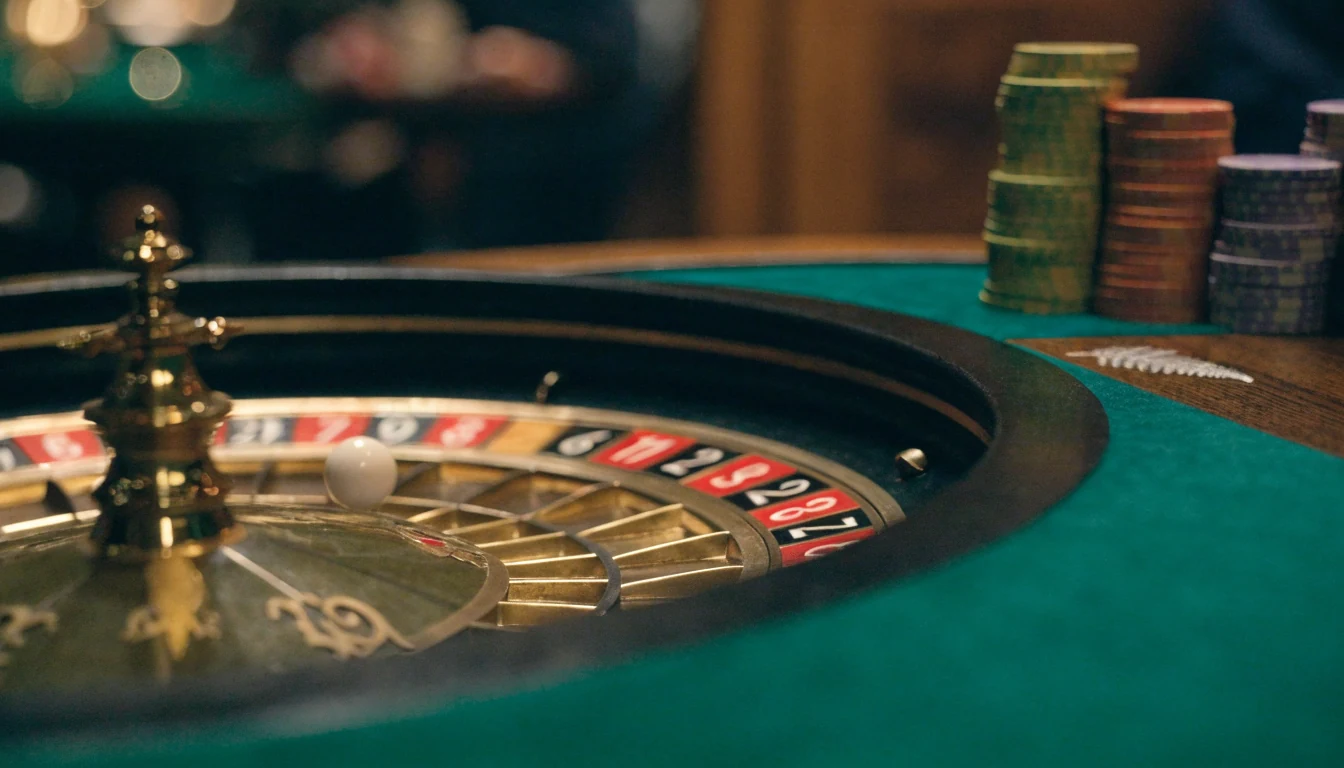
A faster presentation does not change this arithmetic. A free-play version can let you inspect the displayed rules and understand how the interface presents the wheel, but it does not make the underlying probabilities more favourable. The relevant comparison remains the Mini Roulette edge with or without the French rule, rather than whether a game is labelled as speed roulette or offers a green zero.
When comparing games, separate three things: the wheel’s pocket count, the stated house edge, and the settlement rule for zero. A short label may not communicate all three. Read the rules for the specific game before treating its edge as equivalent to another roulette format. If you choose to play for money, do not risk more than you can afford to lose: every real-money bet can lose.
Using a Roulette Speed Calculator to Compare Payouts
A roulette speed calculator can make payout percentages easier to compare, but the result is only as meaningful as the game format entered. The percentage describes the theoretical share of stakes returned under the calculation’s assumptions. It is not a forecast of what you will receive in a particular session, and it does not tell you whether the next spin will win.
A specialist review gives American Roulette a payout percentage of 94.70% and European Roulette a figure of 97.30%. Read those as format-level comparison figures, not as promises attached to every table carrying the same name. The gap reflects the game’s underlying rules and the assumptions used in the calculation. Before relying on a displayed figure, check that the calculator is comparing the intended roulette formats and that the game’s stated rules match those assumptions.
- Confirm the game variant and relevant rules
- Keep assumptions consistent for like-for-like comparisons
- Treat a theoretical return as a personal outcome
- Use payout percentages to predict the next spin
Reading the percentage
A displayed payout percentage is a theoretical return measure: it compares the amount expected to be returned with the amount wagered under the stated model. The part not returned corresponds to the house edge in that model. It is useful for comparing formats, but it does not describe the order or timing of individual wins and losses.
The figure also does not mean that every player receives that share back. Actual results over a session can differ from a theoretical percentage, because the calculator is not settling bets or measuring your personal results. A speed setting may affect how quickly rounds are offered, but it does not change what a payout percentage means. Faster rounds can make it easier to place more wagers in a given period; they do not make the displayed return a prediction.
For a like-for-like comparison, keep the assumptions consistent. If one calculation uses a particular table rule and another uses a different one, their percentages may not be comparable even if both are labelled roulette. Confirm the game variant and relevant rules before treating the difference as evidence that one specific table has a better return.
Why 100/1 Roulette appears as a range
A specialist review reports a payout percentage between 92.86% and 96.19% for 100/1 Roulette. The range matters: it is not a single fixed return figure. A calculator may show a point within that span depending on the version and assumptions it represents, so the label alone is not enough to identify the precise calculation.
When you compare that range with the stated American and European figures, do not treat the highest value as guaranteed or the lowest as the outcome you should expect in a session. It is a comparison of theoretical returns associated with the described format, not a prediction of short-term performance. If the calculator does not explain which version it has modelled, its result is harder to interpret.
Use the tool to check that the displayed format and assumptions are clear, then read the percentage as a model-based comparison. A roulette speed calculator cannot identify a favourable next result, compensate for an unclear game description, or turn a theoretical return into a personal outcome. Every real-money bet can lose, so do not risk more than you can afford to lose.
Why a Betting System Cannot Control the Next Spin
A roulette betting system can change how you choose and size bets, but it cannot determine the next result. Each spin is independent: the outcomes recorded earlier do not change the probabilities on a later spin. A run of one colour, a long absence of a number or a recent win therefore gives no reliable signal that the next spin is “due” to go another way.
This matters when you assess claims about a “best” strategy for speed roulette. A method may set conditions for when to bet, when to stop or how to adjust a stake after a result. Those conditions describe your decisions, not a mechanism that influences the wheel. The faster rhythm of a game may leave less time between decisions, but it does not make a pattern in past results predictive.
Attention: No betting system or progression can remove the house edge or guarantee a profit, as each spin remains an independent event.
What a system can and cannot change
A staking plan can organise your play. For example, it can limit how much you intend to risk or define a point at which you stop. That can affect the length and cost of a session, but it does not improve the chance that a particular bet wins. If the bet loses, changing its size for the next spin does not make that spin more likely to win.
Progression systems rely on the same distinction. Increasing a stake after a loss may make a later win larger, but it also means more money is exposed while the losing sequence continues. Reducing a stake after a win can alter the amount at risk, but it cannot preserve a result or prevent later losses. No progression removes the house edge, and no betting sequence guarantees profit.
Coverage strategies do not change this principle either. Choosing more numbers or bet types changes which results would count as a win for your selection, as well as the amount at risk and the possible return. It does not give you control over which result occurs. Every real-money bet can lose.
The table rule matters more than the system
If you are comparing the odds on even-money bets, the roulette rules matter. French Roulette offers the strongest stated odds for these bets because La Partage and En Prison can soften the effect of zero under their specified conditions. That advantage comes from the table’s settlement rules, not from a betting pattern or from predicting a spin.
The distinction is useful: a rule changes how an eligible bet is settled, while a system changes what you choose to stake. A staking plan cannot reproduce the benefit of a table rule where that rule is absent. Nor does a favourable rule make a winning result certain; an eligible bet can still lose.

Treat a proposed strategy as a way to structure decisions, not as a way to beat randomness. Set a limit you can afford to lose and do not increase it to recover losses. If you find that the pace encourages rushed decisions, pause rather than treating the next spin as an opportunity to correct the previous one. The next outcome remains independent, whatever your system says to do.
What to Check While Trying a Speed Roulette Demo
A demo lets you inspect how a roulette game behaves on screen without staking real money. Use it to learn the interface: where the available betting options appear, how you select or remove a choice, and how the game shows the result and updates your displayed balance. These observations can help you understand the controls before deciding whether the layout is clear enough to use.
Pay attention to how the pace affects your decisions. A faster sequence of rounds can leave less time to review the screen between results. Notice whether you can pause or take time to check your selections, and whether the display makes it clear which choices are active before a round begins. The demo can show how those controls work; it cannot establish that a particular selection is more likely to win.
Treat the displayed balance as part of the practice interface, not as money you have earned or a forecast of future results. Demo outcomes do not reveal how real roulette will behave. Each spin is independent, so earlier results do not change the probability of any outcome on a later spin. A run of one colour or number in demo play is therefore not evidence that a different result is due.
Using a Demo
- Locate where betting options appear
- Practice selecting and removing choices
- Observe how results are displayed
- Evaluate if the pace allows enough decision time
- Check the clarity of the available options
You can also check whether the game explains its available options clearly and whether the result is easy to read after each round. If the interface leaves you unsure what you selected, or how a result is presented, that is useful to discover before real-money play. The demo is for examining presentation and controls, not for testing a system that can predict outcomes.
A demo may not reproduce every condition of a real-money session. Do not assume that practice results indicate what you will experience when staking money, or that a familiar interface makes a bet safer. Roulette outcomes are random, and every real-money bet can lose. If you choose to play for money, do not risk more than you can afford to lose.
Roulette Tips for Reading the House Edge
A house-edge figure describes the casino’s expected advantage across repeated play under the stated rules. It is not a prediction for the next spin, nor a measure of how much a particular session will lose. When you compare speed roulette tables, first identify the rule set attached to the bet; the game’s pace does not change the edge.
Single-zero European Roulette has a house edge of 2.70%. At a French table with La Partage, an eligible even-money outside bet is treated differently if zero lands. That rule can reduce the effective house edge for that bet; the stated edge under La Partage or En Prison rules is 1.35%. The reduction comes from the settlement rule, not from a more favourable prediction about where the ball will land.
This distinction matters when reading a table’s information panel. A figure for the ordinary single-zero game does not automatically describe a French table with La Partage. Check whether the special rule is offered and whether it applies to the specific bet you are considering. La Partage is relevant to eligible even-money bets, not every wager on the table.
The lower figure is an overall mathematical measure, not a promise that zero will land or that a bet will win. On spins where zero does not land, the special settlement condition has no effect. On any individual spin, the result can still go against you, and every real-money bet can lose. Roulette tips are useful when they help you distinguish the rules and interpret the stated edge; they cannot turn a probability into a guaranteed advantage.
For a practical comparison, read the game rules alongside the displayed house edge, then check that both refer to the same wheel and bet conditions. Do not infer that a fast interface, a recent sequence of results or a temporary run changes the calculation. Outcomes remain random, and previous results do not provide a basis for predicting the next one. Treat the house edge as a way to compare rule structures, not as a session budget or a promise of return. Do not risk more than you can afford to lose.
House Edge Insights
- The game’s pace does not change the house edge
- European Roulette typically has a 2.70% edge
- French rules like La Partage can reduce the effective edge to 1.35% for even-money bets
- House edge is a long-term measure, not a session forecast
Online Casino Access and New Zealand’s Licensing Framework
New Zealand’s online casino rules are changing during 2026. The Online Casino Gambling Act 2026 came into force on 1 May 2026, creating the country’s first domestic licensing system for online casino gambling. Its transitional period runs until 1 December 2026. This framework concerns who may provide online casino services and under what conditions; it does not change the terms or mechanics of a speed roulette game.
The Department of Internal Affairs is New Zealand’s primary gambling regulator and oversees regulation of the online casino licensing framework. The Gambling Commission has a distinct licensing role: it hears and decides casino licence applications, issues online casino licences, and approves changes to licence conditions. These responsibilities are related but not interchangeable. The Department provides regulatory oversight, while the Commission makes licensing decisions.
New Zealand’s existing law did not permit online casinos to be based domestically. Before the 2026 Act, gambling services supplied online from outside the country were not licensed or supervised by a New Zealand regulator, and customers had no domestic government recourse if a dispute arose. The new Act establishes a local licensing regime, but the transition does not mean that every online casino is already licensed under it. The full system is not expected to be operational until 2027.
During the transitional period, only providers that were already serving customers in New Zealand before 1 May 2026 may continue to do so, and only under the Act’s transitional provisions. They may continue until 1 December 2026. Providers that have not applied for a licence must stop conducting online casino gambling in New Zealand by that date.
The change affects oversight of providers, not the basic risk attached to gambling. An online roulette game remains a gambling product: a real-money bet can lose. A provider’s presence during the transition should not be mistaken for a New Zealand licence or for domestic government protection. The legal position of a provider depends on the relevant transitional provisions and, once the licensing system is operating, on its licence and any conditions attached to it.

Licensed operators will have to use stricter age and identity verification systems. Verification is therefore part of access to the service, rather than a roulette rule. You may be asked to establish your age and identity before using an account or withdrawing funds. Operators without a licence may face enforcement action and fines of up to NZ$5 million. Unlicensed operation is expected to become an offence around mid-2027, as the new regime moves beyond the transition.
Bonus conditions and withdrawals
Bonuses are separate from a game’s rules. Operators may set eligibility requirements, wagering conditions, expiry dates, game-contribution terms and restrictions on withdrawals. Read the terms attached to a specific offer before accepting it: the advertised bonus amount alone does not explain when funds can be withdrawn or which games count toward the conditions.
For bonus money, the stated requirement is to wager the bonus 50X within 30 days. Winnings from free spins must be wagered 50 times within 7 days. A withdrawal request voids all active or pending bonuses. These conditions can affect an account balance even though they do not alter roulette outcomes. If the terms are unclear, do not assume that a bonus balance is withdrawable or that roulette contributes fully toward its wagering requirement.
A casino’s own terms determine how its offer is applied, subject to the regulatory framework governing the operator. Check the eligibility rules, expiry, game contribution and withdrawal restrictions together, rather than treating the headline offer as the complete condition. Keep bonus funds distinct from withdrawable funds when assessing what the account displays.
The transitional period is a specific stage in the move to domestic licensing, not a statement that all online casinos are authorised by New Zealand. The Gambling Commission’s licensing decisions and the Department of Internal Affairs’ regulatory oversight define different parts of that framework. For a speed roulette casino or any other online casino service, the provider’s status and the terms of an offer are separate matters to assess; neither changes the conditions of roulette itself.
Prepared by the Casino Payment NZ editorial staff.