
Baccarat Strategy for New Zealanders: What to Know
 Available in US
The guide distinguishes card-based estimates from stake changes and explains why neither should be treated as proof of a winning approach.

Table of Contents
- Why Card-Counting and Martingale Systems Need Separate Treatment
- Baccarat Game Strategy: What the Available Evidence Can Support
- Free Baccarat Strategy Guides: Check the Game Before Applying Advice
- Baccarat Betting Strategy and the Limits of Staking Systems
- Can a Baccarat Strategy Tester Prove a System Works?
- Playing Baccarat: Rules Must Come Before Strategy
- Online and Live Baccarat Strategy: Verify the Table Rules First
- What a Baccarat Strategy Can—and Cannot—Change
- Winning at Baccarat: Avoid Guarantees and Unsupported Claims
- The 1-3-2-6 Baccarat System: Treat It as a Betting Sequence, Not Proof
Why Card-Counting and Martingale Systems Need Separate Treatment
Card counting and martingale are often discussed together as ways to improve play, but they describe different mechanisms. Card counting attempts to use information about cards already dealt. Martingale changes the size of a wager after wins or losses. One concerns estimates about the game; the other concerns how much you stake. Treating them as interchangeable obscures what each can—and cannot—show about baccarat.
A card-counting method needs a relationship between the cards that have appeared and the likelihood of what may appear next. The method commonly called Hi-Lo illustrates the idea in blackjack: a player keeps a running count, adjusts it for the number of decks remaining to get a true count, then uses that count to adjust bets. Those steps describe a blackjack method. They do not establish that the same count, card values, or betting decisions are valid for baccarat.
For a baccarat card-counting strategy to be assessable, its instructions would need to specify how cards are classified, what information is tracked, how the count relates to the game’s possible outcomes, and what action follows from a particular count. Those details must fit the actual baccarat rules and dealing procedure. Without a baccarat-specific method and evidence connecting its count to outcomes, the label “card counting” is not evidence that the player can predict a result or gain an advantage.
Choosing where to play is part of approaching baccarat thoughtfully: you should check the available operator details before deciding where to use a strategy. This list gives you a concise reference to the information provided for each option.
License: Tobique Gaming Commission, licence no. 0000002 You can note that Ricky Casino lists a licence from the Tobique Gaming Commission, licence no. 0000002.
License: Curaçao Gaming Authority, licence no. OGL/2024/165/0185 BitStarz lists a Curaçao Gaming Authority licence, no. OGL/2024/165/0185, as a point for you to consider.
License: 07017519840 · Payout speed: 1-3 business days Zotabet lists licence identifier 07017519840 and a payout speed of 1–3 business days. These are the supplied details to consider when reviewing it.
License: Tobique Gaming Commission, licence no. 0000091 7Bit Casino lists a Tobique Gaming Commission licence, no. 0000091, for your reference.
Payout speed: 1-3 business days Lamabet lists a payout speed of 1–3 business days. This is the only supplied detail for you to assess.
License: Malta Gaming Authority, licence no. MGA/B2C/370/2017 Play Grand lists a Malta Gaming Authority licence, no. MGA/B2C/370/2017, which you can take into account.
License: Malta Gaming Authority, licence no. MGA/B2C/394/2017 N1 Casino lists a Malta Gaming Authority licence, no. MGA/B2C/394/2017, as a relevant detail for you.
Payout speed: 1-3 business days Wintino lists a payout speed of 1–3 business days. That is the only supplied information for you to consider.
License: Tobique Gaming Commission, licence no. 0000064 Neospin lists a Tobique Gaming Commission licence, no. 0000064, for your reference.
A “strategy card” also needs to be identified by game. A chart may be useful when it gives decisions that follow from a particular game’s rules; a blackjack basic strategy chart, for instance, uses the player’s hand and the dealer’s up-card to recommend actions such as hitting, standing, doubling, or splitting. That does not make it a baccarat guide. The title or appearance of a chart cannot substitute for instructions that match the game being played.
Martingale works on a different level. It is a staking progression: the player changes the next wager in response to the previous result, commonly increasing it after a loss in an attempt to recover earlier losses when a later bet wins. This description explains the progression’s intention, not its performance. Altering stake size does not, by itself, establish that a baccarat wager is more likely to win or that losses will be recovered.
That distinction matters because a staking rule can be described without knowing whether it has any predictive information about the game. A card-counting proposal makes a claim about information in the deal; a martingale proposal makes a claim about the sequence and size of wagers. If someone presents a betting progression as proof of an edge, the reasoning has skipped a step: a changed stake is not evidence that the next outcome has become more favourable.

The two ideas can also be combined rhetorically without becoming stronger evidence. A player might say that a count signals when to raise a wager and a progression determines how much to raise it. But each part still needs separate support. The count must be shown to provide relevant information for baccarat, and the staking rule must be evaluated on its own terms. A progression cannot validate an unsupported count, and a count cannot make a staking sequence safe or effective merely by being attached to it.
For New Zealand readers comparing claims about baccarat, look for a clear account of what the method observes and what it changes. Does it purport to track cards, or does it only prescribe different stake sizes after results? Does it explain why its instructions fit baccarat rather than borrowing terms from blackjack? If those mechanisms are not stated plainly, the system’s name tells you little about how it works.
No baccarat-specific advantage follows simply from calling a method card counting or martingale. Keep the categories separate: card counting is a proposed way to interpret information from dealt cards, while martingale is a way to vary stakes. Neither label alone verifies a baccarat strategy. Treat claims about outcomes cautiously, set a budget and time limit before playing, and use only money you can afford to lose.
Baccarat Game Strategy: What the Available Evidence Can Support
A strategy is useful only when its instructions match the game being played. That sounds obvious, but advice can appear transferable when it uses familiar casino language: hands, decisions, dealers and odds. Those shared terms do not make the underlying games equivalent. To assess a baccarat casino game strategy, you need information about baccarat itself, not a collection of rules for a different game.
Attention: Do not mistake blackjack strategy charts or rules for baccarat guidance; they rely on different game mechanics and are not interchangeable.
The rules and strategic examples described here concern blackjack. In that game, the dealer’s required actions depend on the value of the hand, and a player’s choices can include hitting, standing, doubling or splitting. A basic strategy chart connects those choices to the player’s hand and the dealer’s visible card. Its recommendations also depend on table rules, such as whether the dealer hits or stands on soft 17. These details explain how blackjack strategy is built; they do not establish how to play baccarat.
That distinction matters because a strategic instruction is not just a general principle. It assumes a particular set of available actions, a way of resolving hands and rules that determine outcomes. If those assumptions belong to blackjack, applying the resulting instruction to baccarat would be a category error. A chart that tells you when to hit or split cannot be treated as a basic baccarat strategy simply because both games are played at casino tables.
The same caution applies to numerical claims. Under the blackjack rules described here, basic strategy is associated with a stated house edge, and changes to blackjack payouts or dealer rules can alter that figure. Those are blackjack-specific relationships. They do not supply a baccarat house edge, establish the effect of a baccarat decision or show that a player can alter baccarat outcomes through a particular approach. Reusing a number from one game as though it described another would give it a meaning it does not have.

For a strategy baccarat game discussion to be technically sound, its reasoning needs to begin with the rules of baccarat and identify which decisions those rules leave to the player. Without that foundation, claims about an optimal choice, a favourable situation or a measurable advantage cannot be checked against the game’s actual mechanics. The correct response is not to fill the gap with a blackjack chart or familiar casino advice. It is to keep the claim within what the game-specific information can support.
This is also why the phrase “basic strategy” should not be treated as a universal method. In blackjack, basic strategy refers to decisions linked to specified hands and dealer cards, under stated table conditions. A strategy with that name in another game would need its own explanation and evidence. The label alone does not show that the method is derived from baccarat rules, nor that its recommendations have been tested for baccarat.
Tournament play does not remove this requirement. Calling advice a baccarat tournament strategy does not establish what the advice changes or whether it suits the tournament’s rules. A tournament setting may sound different from ordinary play, but a claim about strategy still needs to identify the game mechanics it relies on. The blackjack details above cannot fill that role. Without baccarat-specific support, it is not possible to infer a sound tournament method from them.
A careful reader can therefore separate two questions. One is whether a blackjack recommendation follows from blackjack rules; the stated examples address that game. The other is whether a recommendation is justified for baccarat; that requires baccarat-specific rules and analysis. An answer to the first question is not evidence for the second, even when both are presented under the broad heading of casino strategy.

For New Zealand readers, the practical point is about precision rather than a promised outcome: treat a recommendation as game-specific unless its reasoning clearly identifies baccarat and explains the rules it depends on. Advice based on blackjack may be accurate within blackjack, yet remain irrelevant to baccarat. Until a recommendation is grounded in baccarat mechanics, it should not be presented as a verified baccarat method.
Free Baccarat Strategy Guides: Check the Game Before Applying Advice
A free guide can sound precise and still be unsuitable for the game you intend to play. The first check is not whether it offers a betting plan, a chart or confident claims. It is whether its instructions are explicitly about baccarat and tied to the rules of the table you are considering.
A guide about blackjack cannot establish a strategy for baccarat. Blackjack advice depends on details such as the player’s hand, the dealer’s up-card and rules governing actions such as hitting, standing, doubling and splitting. For instance, blackjack basic-strategy charts are built around specified deck and payout conditions; changing those conditions can change the recommendations. Those instructions describe blackjack’s decision structure, not baccarat’s.
That distinction matters when a page uses general language such as “casino strategy” or “card game system” but then gives instructions for a different game. A reference to a running count, a dealer’s up-card or splitting a pair is a sign to check the scope carefully: those are concepts in the blackjack material described here. Their presence does not make the page relevant to baccarat.
Before applying free advice, inspect what the guide actually explains:
- Game identification: Does it state that the advice is for baccarat, rather than blackjack or casino games generally?
- Rules and conditions: Does it identify the baccarat rules the instructions rely on? A strategy cannot be assessed just from its label.
- Reasoning: Does it explain how each recommendation follows from the game’s rules, or simply present a sequence to follow?
- Evidence: Does it separate a claim about a strategy from evidence that the strategy changes outcomes? Confident wording is not a test result.
For New Zealand readers looking for baccarat guidance in 2026, the important distinction is between information that names baccarat and information that actually establishes how a recommendation applies to baccarat. A title alone cannot do that. Nor does describing a method as “basic strategy” prove that it is suitable for this game.
A useful guide should let you identify its assumptions before you act on its advice. If it does not state the game and the rules clearly, you cannot tell whether its recommendations fit the table. If it relies on blackjack rules, treat it as blackjack material rather than adapting its instructions by analogy. Similar-sounding terms do not show that two games share the same decisions.
Free access does not make a guide either reliable or unreliable. The relevant question is whether its scope is clear and its claims are supported for the game it addresses. Where an explanation offers baccarat recommendations but does not show the rules and reasoning behind them, you have no sound basis for treating those recommendations as verified. Keep the guide’s claims separate from what it demonstrates, and do not mistake a neatly presented instruction for proof that it works.
- Check if the guide is explicitly about baccarat
- Identify the specific baccarat rules used
- Look for reasoning tied to baccarat mechanics
- Separate strategy claims from evidence
- Use guides based on blackjack rules
- Trust a guide based on its title alone
- Assume “basic strategy” is universal
- Mistake confident wording for test results
Baccarat Betting Strategy and the Limits of Staking Systems
A betting plan controls how much you risk and when you change your stake. It does not, by itself, explain which baccarat wager has the best prospects. Those are separate questions: one concerns the size of your exposure; the other requires reliable information about the game’s rules and probabilities.
A pattern of larger or smaller bets cannot make a particular deal produce a preferred result. If the game and wager remain unchanged, changing the stake changes the amount at risk, not the cards dealt. A sequence may therefore alter how much you win or lose across a session without establishing that you are more likely to win. Any claim that a staking system improves baccarat results needs evidence about the game and the system, not merely a memorable sequence of bets.
Flat betting means keeping the stake at a consistent level rather than adjusting it in response to previous outcomes. This can make your exposure easier to track: each decision uses the same planned stake, so a losing result does not automatically trigger a larger one. But flat betting is not a method for overcoming the game’s underlying probabilities. It is a way to keep bet sizing predictable.
A variable-stake plan has a different effect. Raising a stake after a loss increases the amount exposed on the next decision; reducing it after a win lowers that exposure. Neither response changes what happened before, and neither guarantees what will happen next. If you use a plan that changes stakes, identify in advance what triggers each change and when you will stop. Without clear limits, a sequence can expand beyond the amount you intended to risk.
For practical control, set a budget and a time limit before you play, and use only money you can afford to lose. Treat the budget as a boundary, not as a target to recover after a losing run. If continuing would require increasing your stake or extending your planned session, stop rather than treating the next bet as a way to repair the previous result.

The key test for a baccarat betting strategy is what it can actually control. It can help you make stake decisions consistently, monitor your total exposure and avoid impulsive increases. It cannot guarantee a winning session or turn a staking pattern into proof of an advantage. Keep those claims separate when assessing advice: a clear explanation of bet sizing is useful for managing risk, but it is not evidence that the pattern improves baccarat outcomes.
Before using any plan, check the table rules and make sure the advice applies to that specific game. The label “baccarat strategy” is not enough to show that a staking recommendation has been tested against the game you are playing. If the explanation gives no basis for its claimed effect, regard it as a way of arranging bets—not as a demonstrated route to better results.
Can a Baccarat Strategy Tester Prove a System Works?
A baccarat strategy tester can show what happens when a defined set of rules and assumptions is applied to simulated hands. It cannot, by itself, establish that a system will improve results at a real table. The distinction is between checking a calculation and proving that the calculation represents the game you intend to play.
To assess a test, first identify its inputs. The tester should state which baccarat rules it models, how outcomes are generated, and what the strategy changes. If those details are not available, you cannot tell whether its output follows from baccarat or from assumptions built into the tool. A precise-looking report does not resolve that uncertainty.
The same issue applies to claims about whether there is a baccarat strategy. The word “strategy” may refer to decisions during a hand, a way of choosing bets, or a method for interpreting past outcomes. A tester must define what it is testing. Otherwise, two systems can use the same label while making different decisions, and their results cannot be compared fairly.

What a useful test would need to show
A credible assessment would make its model inspectable. You would need to know how the game’s rules are represented, how the possible outcomes are assigned probabilities, and how the test handles a sequence of hands. The results should be reproducible from those stated inputs. These are requirements for evaluating the test, not evidence that any particular baccarat system works.
It also matters what the reported result measures. A simulated outcome may describe one run of a model, while a claim about a system implies more: that the model is appropriate and that the result is not merely a feature of one sample. Without baccarat-specific rules, probabilities and test results that can be checked, there is no sound basis for treating a displayed win rate or profit figure as proof.
A system baccarat strategy tool may invite you to change settings and compare outputs. That can help reveal how sensitive a model is to its assumptions. If changing an input changes the result, the difference tells you about the model—not automatically about what will happen in play. If the settings are hidden, even that limited comparison is unavailable.

Watch for a tool that presents an outcome without explaining its method. A chart, score or summary does not show whether the underlying game has been modelled correctly. Nor does repeating a simulation make an unsupported model reliable. More output cannot compensate for unclear rules or probabilities.
Treat a tester as a way to inspect stated assumptions, not as an authority on baccarat. Before relying on any result, ask what it models, how its calculations can be checked, and whether the displayed conclusion follows from those inputs. If those questions have no clear answers, the result does not prove that the system works.
Playing Baccarat: Rules Must Come Before Strategy
Before you apply any playing strategy, establish what the table actually requires you to do. A strategy is a set of decisions linked to particular rules; if those rules are unknown, you cannot tell whether the advice fits the game in front of you. The table’s own instructions should therefore be your starting point, not a remembered rule from another casino game.
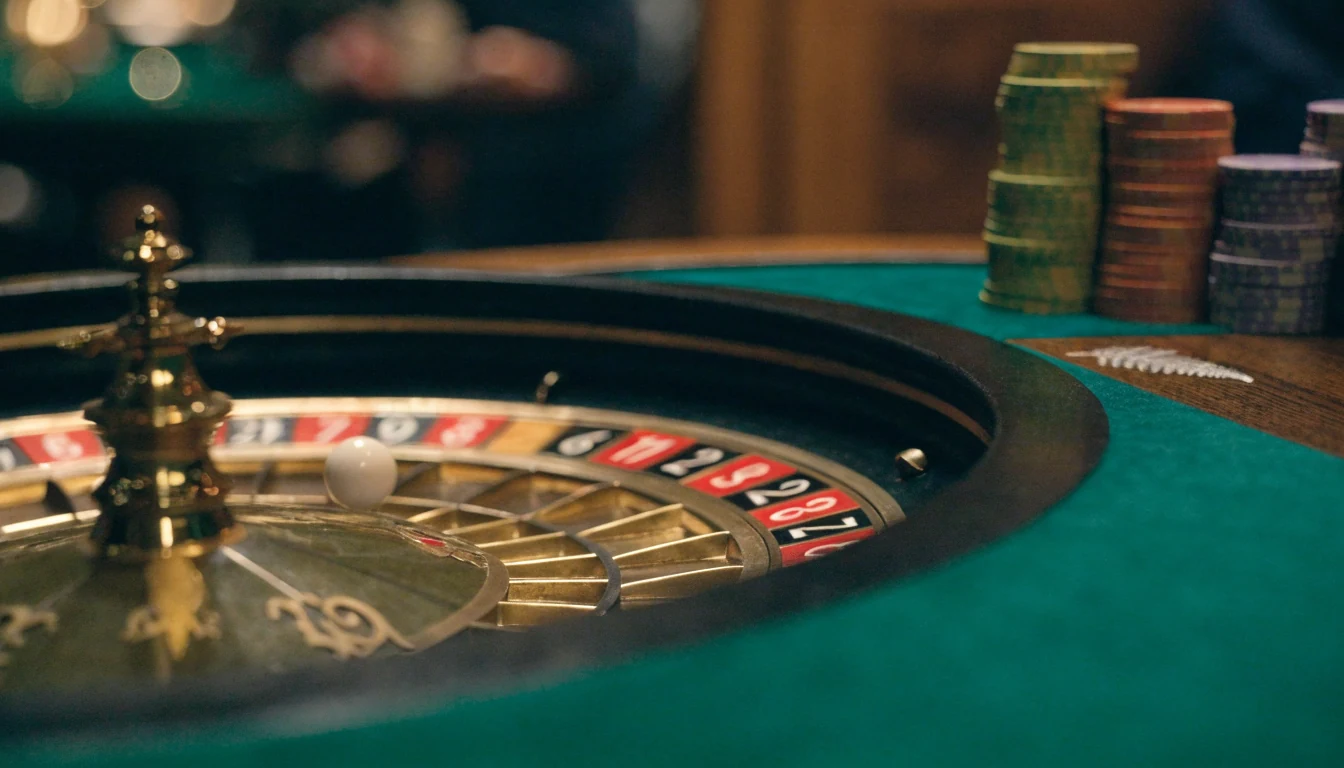
That distinction matters because the available rule details often mistaken for general casino guidance are specifically about blackjack. For instance, dealer decisions based on a hand’s total, or advice to hit, stand, double or split, describe blackjack mechanics. They do not tell you how a baccarat hand is dealt, how its result is settled or what choices a player may make. Transferring those instructions to baccarat would mean acting on a different game’s rules.
Read the table instructions before playing
Find the rules for the specific baccarat table and read them before placing a wager. Identify how a round proceeds, which decisions belong to the player and which are determined by the game, and how each available outcome is paid. If a rule or term is unclear, pause and seek an explanation from the game interface or an appropriate staff member rather than filling the gap with an assumption.
Do not treat the word “baccarat” as enough to establish that every table follows identical procedures. The rule display for the particular game is what you need to understand. This applies whether you have played before or are looking at a new table: a familiar name does not prove that every relevant condition is the same.
A useful way to learn is to follow a round without wagering, where the game allows it. Trace each step in order: what starts the round, what information is visible, who or what determines the next action, and how the final result is recorded. The aim is not to predict a result. It is to understand which actions you control and which are set by the rules.
Separate understanding from strategy
Once you can explain how a round works, assess any advice against those rules. Does it refer to this game, and does it describe a decision you are actually permitted to make? If a guide relies on blackjack choices such as splitting or doubling, it is not an instruction for baccarat merely because it uses the word “strategy.” Stop when the advice does not match the table rather than adapting it by guesswork.

This is the practical connection between learning how to play and deciding how to play: rule knowledge establishes the available actions; strategy can only address decisions that the rules leave to you. It cannot make an unavailable action possible or turn instructions for another game into baccarat guidance.
Before playing, set a budget and a time limit, and use only money you can afford to lose. These safeguards do not change the rules or predict the outcome. They define when you stop, while understanding the table tells you what happens during play.
Online and Live Baccarat Strategy: Verify the Table Rules First
Advice for online baccarat and advice for a live table can sound interchangeable, but neither label tells you which rules govern a particular game. Before applying a strategy, identify the rules attached to the table you are actually considering. A familiar name or similar-looking layout is not enough to establish that two games work the same way.
For an online table, read the displayed rules and paytable rather than inferring them from buttons, labels or screen design. Establish which wagers are available and how the game determines and pays each result. If a term is unclear, do not build a decision on an interpretation you have not confirmed. The interface shows how to interact with the game; it does not, by itself, explain every condition that affects a wager.
A live dealer format also needs a table-specific check. Seeing cards dealt in real time does not establish that the rules match those of another live table or an online version. Read the information provided for that game and confirm that it covers the outcomes and wagers relevant to the advice you want to use. If you cannot establish a match, treat the advice as unverified for that table.
Online and live dealer formats are descriptions of presentation, not proof of a strategic advantage or a fundamental difference in game rules.
The distinction matters because a strategy is only meaningful when its assumptions match the game. A recommendation written for one set of rules cannot be transferred safely just because another table is also called baccarat. This applies whether the guidance describes a choice of wager, a sequence of decisions or a way to interpret results: first establish what the table permits and how it settles outcomes.
Do not use blackjack rules as a substitute. Blackjack guidance about card values, dealer actions, splitting or basic-strategy charts belongs to blackjack; it does not establish how baccarat is played or which decisions its rules allow. Similar casino terminology is not evidence that the games share a strategy.
Treat “online” and “live” as descriptions of how a game is presented, not as proof of a strategic difference or advantage. Once you have checked the specific table rules, compare the advice with those rules and reject any claim whose assumptions do not fit. If the rules are unavailable or ambiguous, the sound conclusion is not to guess: you do not yet have enough information to apply that advice responsibly.
What a Baccarat Strategy Can—and Cannot—Change
A strategy is a decision rule: it tells you what to do when a particular situation occurs. Its effect is limited to the decisions it governs. It cannot dictate which cards appear, control the sequence of a game, or guarantee how a hand ends. That distinction matters whenever a baccarat strategy is presented as a way to influence results.

A strategy may make your choices more consistent. You can follow a defined approach rather than change your decisions in response to a recent win or loss. Consistency, however, is not evidence that the approach improves the chance of a favourable result. To support that claim, the method would need to be assessed against the actual game rules and relevant outcome data. Without that basis, a confident explanation of a strategy is not proof of its effect.
It also helps to separate a procedure from a prediction. A procedure tells you how to act under stated conditions. A prediction claims that a particular result is more likely to follow. The first can be described clearly even when the second has not been demonstrated. If an explanation moves from “this is what the system instructs” to “this will make you win more often,” it has added a claim that requires separate evidence.
The same caution applies to the word “advantage.” A method may feel more structured, or reduce uncertainty about what you intend to do, without changing the game’s underlying probabilities. Those are different outcomes. A clear routine can help you understand your own decisions; it does not establish that the game has become more favourable.
Before relying on any strategy baccarat advice, identify exactly what it claims to change. Does it organise decisions, make a prediction, or assert an effect on the odds? Those claims are not interchangeable. A claim about the odds needs support tied to the particular baccarat rules in use, not merely a persuasive name or a description of how the method operates.
Treat strategy as a framework for decisions, not as control over the game. When the rules and evidence behind a claimed effect are not established, the responsible conclusion is limited: you may know what the method tells you to do, but not that following it changes your chance of winning.
No baccarat strategy can guarantee a win. Treat any promise of guaranteed results as a warning sign and only use money you can afford to lose.
Winning at Baccarat: Avoid Guarantees and Unsupported Claims
A claim that a baccarat method guarantees a win should be treated as an outcome promise, not as an explanation of how the game works. No method can be presented here as a proven way to win at baccarat. A confident label, a sequence of instructions or a story about a successful session does not establish that a system reliably produces wins.
The distinction is between describing an action and proving its effect. A guide might tell you when to place a bet or how to respond to a result. That only explains what the player is being asked to do. To support a claim that the method helps you win, the evidence would need to concern baccarat itself and show how the method performs under the relevant game rules. Without that connection, the claim remains unverified.
This matters when you are looking for a baccarat winning strategy. The wording can make a recommendation sound like a dependable route to profit, even when it only describes a way to play. “Winning” may refer to a single hand, a short session or a lasting result; those are different claims. A single success does not show that the same approach will work again, and a method’s name is not evidence of performance.
The same caution applies to advice framed as how to win in baccarat. Ask what the statement actually promises. Does it describe a choice you can make, or does it imply that the choice will control the result? The first can be a set of instructions; the second requires evidence that the instructions change outcomes. If that evidence is not provided, do not treat the promise as established.
You can assess a guide by checking whether it identifies the baccarat variant and rules it addresses, explains the reasoning behind its recommendations, and supports outcome claims with relevant evidence. If it moves from a suggested action to a guarantee without showing that link, the conclusion exceeds what the explanation can support. A method may be presented with certainty while leaving its central claim unproven.

No strategy can make a promised win certain. Treat claims of guaranteed results as a warning sign, and separate advice about what to do from evidence about what that action can achieve. If you choose to play, set a budget and a time limit beforehand, and use only money you can afford to lose.
The 1-3-2-6 Baccarat System: Treat It as a Betting Sequence, Not Proof
The 1-3-2-6 system is a named betting progression, not evidence that a baccarat wager is more likely to win. Its name alone does not tell you how a particular guide defines a unit, when it says to move between stakes, or what to do after a loss. Those details matter: two descriptions using the same label may not give the same instructions.
Before assessing a version, identify its exact rules. Check what counts as a completed cycle, which outcomes trigger a change in stake, and when the sequence resets or stops. If a guide leaves any of that unclear, you cannot reliably follow its method or compare results with another account of the system.
Even a clearly specified progression only organises bet sizes. It does not change the cards dealt or establish that the next outcome is more likely to favour you. A sequence can alter how much you have exposed when outcomes arrive, so following it may produce a different pattern of wins and losses than flat betting. That difference in staking is not proof of improved odds or a dependable return.
Do not treat a favourable run as validation. A short set of results can show what happened in those hands, but it does not establish what the sequence will do in future play. Nor does the system’s numerical name amount to a promise of a result.
If you consider using a described version, check the table rules first and decide in advance what amount you can afford to lose and how long you will play. Keep those limits separate from the progression: a sequence should not be a reason to chase losses or continue beyond your budget.
Does basic strategy work online?
Yes, a basic strategy chart can be used for online blackjack when it matches the game’s rules, including the number of decks and dealer rules.
Does the Martingale system actually work in roulette?
No staking progression guarantees a win or recovery of earlier losses. Increasing your roulette bet after a loss changes the amount you wager, not the likelihood of the next result.
When can you split in blackjack?
You can split a pair on your initial two-card hand by placing a second bet equal to your first. Splitting 4s, 5s and 10s is generally not recommended.
When should you hit or stand in Blackjack?
Use a basic strategy chart that matches the table rules and compares your hand with the dealer’s up-card. For example, with a hard 12 through 16, hit when the dealer shows 7 or higher.
Published by the Casino Payment NZ team.