Slot Strategies for New Zealanders: Limits and Choices
 Available in US
The guide separates decisions such as whether to play or continue from claims that a method can control a slot’s returns.

Table of Contents
- What Slot Machine Strategy Can—and Cannot—Control
- Online Slot Play: Keep Game Advice Separate from Blackjack Strategy
- Wagering and Session Limits: What You Can Set Before You Play
- Why a Betting System Does Not Guarantee a Winning Session
- A Practical Evidence Check for New Zealand Players
- Casino House Edge: What the Verified Comparisons Actually Show
- Online Betting: Track Total Wagered, Not Just Your Starting Bankroll
- Why Blackjack Card Counting Is Not a Slot Strategy
- Is There a Verified Strategy for Slots in This Evidence Set?
- Learning Basic Strategy: The Verified Example Is Blackjack
What Slot Machine Strategy Can—and Cannot—Control
A slot strategy is useful only if it identifies a decision you can make and explains what that decision changes. The word “strategy” alone does not show that a method improves a result. It may describe a way to organise play, but that is different from demonstrating control over what a game returns.
This distinction matters because a player acts before and during a game, while the result of a play is a separate matter. You can choose whether to begin, which available option to select, and whether to continue. Those choices shape your participation. They do not, by themselves, establish that you can direct a particular result or make a game pay.
Decisions are not the same as outcomes
To assess a claimed slot machine strategy, separate its steps from its promised effect. A method might tell you to choose a particular game, alter a wager, or stop after a stated event. The steps may be clear enough to follow. The claim that following them improves the chance of a favourable result is a separate claim and needs support.
A useful explanation would identify the game and the relevant rules, describe the player’s choice, then show how that choice affects the outcome or the terms of play. Without that chain, a recommendation is not a demonstrated advantage. A confident tone, a memorable pattern, or a list of steps cannot substitute for an account of cause and effect.
This does not make every form of planning pointless. It means planning should be described accurately. A personal rule can help you decide how you want to play, but it should not be presented as a way to control results unless that effect has been established for the game in question. The difference is between controlling your own action and controlling the game.
What a strategy claim needs to show
When you encounter advice described as the best strategy for slot machines, look for a specific mechanism rather than a broad promise. What feature of the game is the advice based on? Which choice is available to you? What changes when you make that choice? If those points are not answered, you cannot tell whether the advice concerns game results, the size or timing of your wagers, or simply a preferred style of play.
The same standard applies to methods described as suitable for a small wager, a larger wager, or a progressive approach. A label does not establish that the method is matched to a game or that it improves the result. Nor does repeating a sequence of actions turn that sequence into a reliable way to influence a game. The claim must be tied to evidence about the particular game and the decision being recommended.
Be especially careful with advice that treats a past result as a signal about what should happen next. A previous outcome is not, on its own, an explanation of the next one. To make that inference responsibly, you would need to know how the game produces results and whether the past event affects a later decision. Without that explanation, a pattern noticed in play is not proof that a strategy works.
Keep the claim narrow
A responsible description of slot machine strategies should say exactly what they are intended to control. If a method helps you choose when to play or when to stop, describe it as a personal decision rule. Do not let that language imply that it changes the game’s result. If a claim concerns a particular feature, it should apply only to games where that feature and its relevant rules are known.
This is also why a method from another casino game cannot simply be transferred to slots. Advice is meaningful only in the context of the decisions and rules it addresses. A procedure that tells you how to act in one game does not become a slot strategy because both games are offered by a casino. Similar terminology is not evidence of a shared mechanism.
Attention: A confident tone or a list of steps cannot substitute for a demonstrated account of cause and effect regarding game outcomes.
For New Zealand players considering a slot machine strategy, the practical test is straightforward: identify the action the advice asks you to take, then identify the result it says that action will change. If the second part is only implied, or depends on an unexplained pattern, treat the advice as a preference rather than a proven method. This keeps a strategy claim within the limits of what it actually describes.
The most precise answer to whether there is a strategy for slot machines depends on what “strategy” means. There can be a plan for your own choices. That does not make it a method for steering game outcomes. The distinction is not a technicality: it tells you whether advice is about managing your behaviour or claiming an effect on the game. A sound explanation keeps those two ideas separate, instead of treating a set of instructions as proof that the result can be controlled.
Online Slot Play: Keep Game Advice Separate from Blackjack Strategy
Playing through a website changes where you access a game; it does not make advice for one casino game transferable to another. A blackjack chart is designed for blackjack. It cannot serve as an online slot strategy simply because both games appear in the same casino lobby.
The distinction is about the decisions each game presents. Blackjack advice is tied to blackjack rules, and a chart is useful only when it matches the rules of the table or game. That match matters whether you play against a live dealer, use an online version, or sit at a land-based table. Moving between those settings does not, by itself, require a different chart; changing the rules may.

Slots do not use blackjack charts. Advice about what to do at a blackjack table is not a best strategy for playing slot machines, and combining the two under a general label such as “casino strategy” obscures what the advice actually applies to. If a tip tells you to consult a blackjack chart, its subject is blackjack, not slots.
What online changes—and what it does not
The word “online” describes the setting, not a shared decision system across games. Online blackjack still uses blackjack rules, so a chart can be relevant when it corresponds to those rules. Online slots are a different category. The fact that both are available on a casino site does not make a blackjack method applicable to slot play.
This is a useful test when you encounter online slots tips or a proposed slot betting strategy. Ask what game the advice is about and what decisions it addresses. If it discusses a blackjack chart or blackjack table rules, keep it in the blackjack category. If it is described as a strategy for online slots, it needs to stand on its own as slot-specific guidance; blackjack terminology does not supply that connection.
The same check applies to advice aimed at beginners. A beginner may see a chart presented as a general way to make better casino decisions. Its actual scope is narrower: it belongs to blackjack and must be matched to the rules of the blackjack game being played. Calling it an online casino method does not extend it to every game offered online.
Matching blackjack advice to an online game
For online, live-dealer, and land-based blackjack, the setting is not the only relevant detail. The chart must fit the rules in force for that game. A chart made for different rules may give you instructions that do not match the table you have chosen. Before following one, check the table rules and confirm that the chart is intended for that version of blackjack.
This does not turn blackjack advice into a slot method. It shows why a strategy needs to be tied to the game it describes: the same setting can contain different games, and rules affect whether a particular chart is appropriate. If you move from an online blackjack table to an online slot, you have changed games, not merely interfaces. Blackjack guidance should stop at that boundary.
Be careful with headings that promise the best online slot strategy or strategies for winning at online slots. A confident title is not evidence that a method applies. Look for a clear explanation of the game addressed and the conditions under which the advice is supposed to work. If the explanation is actually about blackjack, treat it as blackjack guidance. If it gives no slot-specific basis, do not assume that the blackjack chart fills the gap.
Keeping advice within its game
A practical way to sort casino guidance is to name the game before considering the recommendation. “Blackjack chart” is specific; “casino strategy” is broad enough to mislead. The former signals a tool with a defined setting and rules to check. The latter can make advice sound universal even when it is not.

This distinction matters when comparing online slot strategies with blackjack material. A chart may help organise decisions at blackjack, but it does not tell you how to play a slot. Nor does the phrase “best strategy” establish that the advice changes how a slot behaves. Keep the claim and its subject together: blackjack advice belongs to blackjack, while a claim about slots must concern slots directly.
If an online page places blackjack instructions beside slot recommendations, read each separately. Check whether a passage names blackjack rules or calls for a blackjack chart; if it does, do not carry it over to a slot. This simple separation prevents a familiar strategy from being mistaken for a universal one. It also keeps the limits of the advice visible: a chart can be relevant to online blackjack when its rules match, while the same chart has no stated role in slot play.
So when you look for a strategy for online slots, do not use blackjack charts as a substitute for slot-specific guidance. First identify the game the advice addresses. Then check that its conditions match that game. “Online” alone is not enough to connect two different games, and shared placement on a casino site does not make their strategies interchangeable.
Wagering and Session Limits: What You Can Set Before You Play
A sensible slot-playing plan starts with boundaries you can enforce yourself. Before you begin, decide how much money you are prepared to lose and how long you are willing to play. These are limits on your spending and time, not methods for changing what a game will do.
Set Your Boundaries
- Decide the total amount you are willing to lose during the session
- Set a specific time when you will stop playing
- Determine exactly what you will do once either limit is reached
Treat your budget as the cost of entertainment, not as money you expect to recover or grow. Use only money you can afford to lose without affecting essential expenses. Once you reach the amount you set, stop. Do not add funds because a session has gone badly, or because you feel a win is due. A budget is useful only if you keep it when emotions make continuing tempting.
Set a time limit as well. Time can pass unnoticed during play, and deciding when to stop in advance reduces the chance that a session expands simply because you are still seated or logged in. Choose a stopping point that fits your plans, then finish when it arrives, whether the session has been positive or negative.
Make the limits usable
A limit needs to be clear enough to guide a decision. Before playing, decide:
- the total amount you are willing to lose during the session;
- when you will stop playing;
- what you will do if you reach either limit.
For example, the action after reaching a boundary can be simple: close the game and do something else. Avoid making a new decision while trying to recover losses or extend a session. If you cannot follow the limits you set, taking a break from gambling is safer than raising them.
Do not count a possible win as part of your budget. The amount you can afford to lose should be based on your finances, not on what you hope a game might return. Likewise, money set aside for essentials is not available for play just because it is temporarily in your account.
A wagering plan can also define how you will handle winnings. You might decide in advance to stop at your time limit rather than keep playing because you are ahead. This does not make a session safer in the sense of controlling its outcome; it simply prevents a changing result from replacing your original decision about how long to play.
Separate limits from game advice
A slot wagering strategy is sometimes described as a way to improve the chance of a favourable result. A spending cap and a stopping time do something different: they constrain your exposure. They do not establish that a particular game is more likely to pay, or that changing the size of a wager will produce a better outcome.
Keep the plan straightforward. Do not treat a losing run as a reason to increase stakes, borrow money, or continue beyond your limit. Do not treat a win as proof that the session can safely continue. Either result can make it harder to stop, which is why the decision is best made beforehand.
If you use an account or device feature to help maintain a boundary, do not assume that such a feature is available or works in a particular way. Check its settings before relying on it. Your own plan should remain clear even without an automated reminder: the budget is the maximum you have chosen to risk, and the time limit is when you stop.
Risk Warning
Do not increase stakes to chase losses or borrow money to extend a session, as this does not improve the chance of a favourable result.
Why a Betting System Does Not Guarantee a Winning Session
A betting system is a rule for choosing how much to stake and when to change that stake. It can make your decisions more consistent, but consistency is not control over the result of a game. A plan that changes the size of a wager after a win or loss changes your exposure; it does not, by itself, establish that the next result will be favourable.
This distinction matters when assessing claims about a slot strategy. A staking pattern may describe what you do with your money, but that description is not evidence that the pattern changes a slot’s outcomes or creates a reliable route to a winning session. The same caution applies to claims that a particular sequence of bets can recover losses. Recovery is an outcome, not something a betting rule can promise.
Why progressive betting can mislead
Progressive systems increase or reduce stakes according to a set pattern, often in response to earlier results. The pattern can feel purposeful because each new wager follows a rule. But a rule governing your stake is not the same as a rule governing the game. If you raise a wager after losing, you commit more money to the next decision without making a win certain. If you raise it after winning, the larger stake also exposes more money to the next result.
The weakness is not that a progression lacks structure. It is that structure alone cannot guarantee the result the system is meant to produce. A sequence can continue in an unfavourable direction, and a plan that depends on a later win has no power to require that win. Calling the sequence a strategy does not remove that uncertainty.
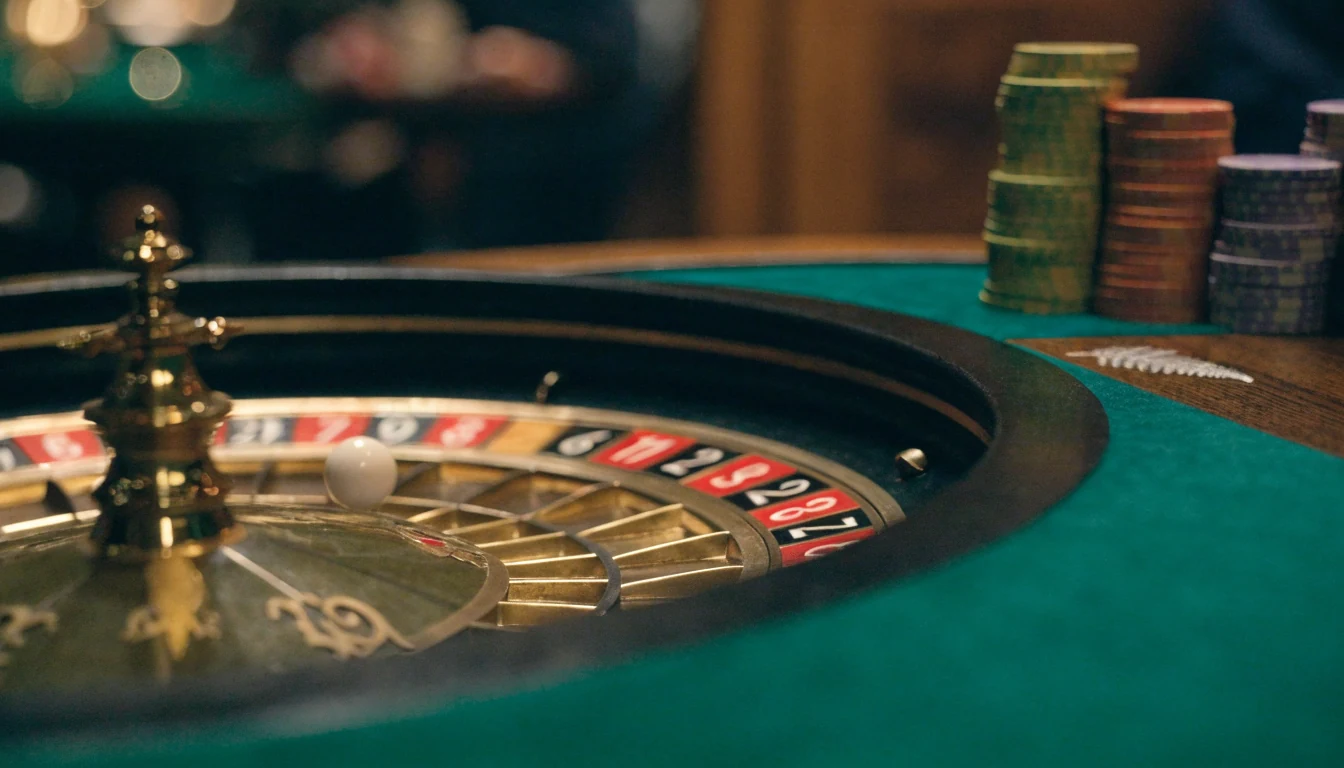
Flat betting avoids changing the stake in response to each result, but it should not be mistaken for a way to secure a profit. It is simply a more stable staking pattern. Any betting plan still needs to be judged by what it can actually control: the size of your wagers and the decisions you choose to follow.
Why chasing losses is not recovery
Loss-chasing starts with a past loss and treats a later wager as a way to undo it. That framing can encourage you to stake more than you intended, because the target is no longer just the next decision; it is also the amount already lost. Yet the earlier result does not make the later wager a guaranteed recovery. Increasing the stake changes how much you have at risk, not what the result must be.
A useful test is to ask what a system promises and what its rules can demonstrate. If the promise depends on a future win, the plan cannot ensure that promise. If it depends on progressively larger stakes, it may require you to risk more as the session develops. Neither feature proves that the game has become more favourable to you.
A system can therefore be useful as a boundary only when it helps you follow limits you have already chosen. It is not a method for overcoming unfavourable results. Do not increase stakes to chase losses, and do not treat a progression as evidence that a winning session is due. Play only with money you can afford to lose, and stop when your intended boundary is reached.
A Practical Evidence Check for New Zealand Players
If you’re exploring slots strategies in New Zealand in 2026, it helps to check the details available for each casino before deciding where to play. Use this list as a starting point for your own research.
License: Tobique Gaming Commission, licence no. 0000002 Ricky Casino lists a Tobique Gaming Commission licence, number 0000002. That licence detail gives you a specific item to check as part of your research.
License: Curaçao Gaming Authority, licence no. OGL/2024/165/0185 BitStarz lists a Curaçao Gaming Authority licence, number OGL/2024/165/0185. You can use the licence information as one point to verify when considering the casino.
License: 07017519840 · Payout speed: 1-3 business days Zotabet lists licence number 07017519840 and a payout speed of 1–3 business days. These are the available details to consider when assessing it.
License: Tobique Gaming Commission, licence no. 0000091 7Bit Casino lists a Tobique Gaming Commission licence, number 0000091. The licence reference is a specific detail you can check before deciding whether it suits you.
Payout speed: 1-3 business days Lamabet lists a payout speed of 1–3 business days. This is the available detail to take into account when considering it.
License: Malta Gaming Authority, licence no. MGA/B2C/370/2017 Play Grand lists a Malta Gaming Authority licence, number MGA/B2C/370/2017. You can verify that licence detail as part of your research.
License: Malta Gaming Authority, licence no. MGA/B2C/394/2017 N1 Casino lists a Malta Gaming Authority licence, number MGA/B2C/394/2017. That reference provides a specific detail for you to check.
Payout speed: 1-3 business days Wintino lists a payout speed of 1–3 business days. This is the available information to consider when reviewing the casino.
License: Tobique Gaming Commission, licence no. 0000064 Neospin lists a Tobique Gaming Commission licence, number 0000064. You can use that licence reference as one point of your own checks.
A practical way to assess a slot claim is to separate what it says about the game from what it says about your choices. Advice about setting personal limits concerns how you manage a session; it does not establish that a particular action changes a slot’s outcome. A claim about improving results needs support specific to the game and the mechanism it describes. Treat confident wording as no substitute for that support.
The same distinction matters when advice uses the language of casino strategy. Blackjack guidance can depend on a player’s hand, the dealer’s up-card and the table rules. Those decisions describe blackjack, not a general method for slots. A strategy from one game should not be transferred to another merely because both are offered by a casino.
New Zealand’s online gambling framework also needs to be described with its dates intact. The Online Casino Gambling Act 2026 came into force on 1 May 2026 and created the country’s first domestic licensing system for online casino gaming. Its transition period runs from that date until 1 December 2026. Online casinos that were already serving people in New Zealand before the Act took effect may continue during that period, subject to the transition provisions. The fully licensed regime is not expected to be operating in full until 2027.
This framework sits alongside an earlier restriction: New Zealand law did not permit online casinos to be established within the country. Before the 2026 Act, offshore online casino services were not licensed or supervised by a New Zealand regulator, and customers who wagered with an offshore site had no domestic government recourse. These are legal and regulatory distinctions, not evidence that a slot strategy works.
If you are preparing material that promotes gambling, check the law that applies at the time and make sure any statement about legal status reflects the relevant transition stage. A description that was accurate before the Act came into force may not describe the position during the transition or after the licensing regime becomes operational. Do not present a foreign licence as if it were a New Zealand licence, or imply that a change in regulation validates claims about game outcomes.
For players assessing advice, look for a clear account of what the proposed method changes and what it does not. A recommendation about personal conduct is not proof of improved slot odds; a rule for another casino game is not slot guidance. Keeping those categories separate makes the advice easier to evaluate without turning an unsupported promise into a strategy.
Casino House Edge: What the Verified Comparisons Actually Show
House edge describes a game-level mathematical advantage for the casino under stated conditions. It is useful when comparing games, but the figure belongs to the game and its rules; it is not a general measure that can be carried across a casino’s entire offering.
Can have the lowest house advantages when played with optimal strategy.
Has a house edge of 5.26%.
House edge and returns are game-specific and cannot be inferred from other casino games.
Blackjack and video poker can have the lowest house advantages when played with optimal strategy. That condition matters: the comparison is about decisions made according to the strategy appropriate to each game, not a promise that a player will win. A low house advantage still leaves the casino with an advantage over the long run, while an individual result can differ.
American roulette provides a separate point of comparison. Its house edge is 5.26%. That number describes American roulette, not roulette in every format and not other casino games. It should not be used to estimate the cost of playing blackjack, video poker or slots.
The distinction matters when you look for a casino slot strategy. A strategy that concerns one game cannot be treated as evidence about another simply because both are offered by the same casino. Blackjack decisions and video poker decisions are made within their own game structures. Their lower house advantages under optimal play do not establish a slot’s house edge, return or best way to play.
Nor does a comparison between games tell you that a particular slot is more favourable. To make that assessment, you would need information that applies to the specific slot and its rules. The figures for blackjack, video poker and American roulette do not supply it. Applying the roulette percentage to slots, or assuming that slot play can use blackjack or video poker strategy, would mix unlike measurements.
A useful reading habit is to keep each claim attached to its subject and condition. If a statement gives a house edge, check which game it describes and whether the comparison assumes optimal play. If it concerns blackjack or video poker, it remains a statement about those games. It does not become a casino slots strategy through proximity or broad wording.
This also puts the phrase “lowest house advantage” in context. It is a relative comparison among the games being discussed, with optimal play as a condition; it does not mean no risk, a guaranteed return or a result that applies to every player. For slots, these comparisons provide no basis for choosing a particular play pattern or predicting a session outcome. Keep the game, the stated condition and the conclusion aligned, and avoid using a figure outside the game it measures.
Online Betting: Track Total Wagered, Not Just Your Starting Bankroll
A starting bankroll is the amount you bring to a session. Total wagered is the sum of the stakes placed during play. They measure different things: one describes the funds available at the outset; the other describes the volume of betting activity. Confusing them can make a house-edge figure seem to apply to the wrong amount.
The house edge is calculated against total money wagered, not against your starting bankroll. It therefore does not mean that a stated edge is a fixed share of the amount you first deposit or set aside. To understand what the measure refers to, keep the total stakes separate from the balance you began with.
Consider a session in which some of the same funds are wagered more than once. Each stake contributes to total action, even though the bankroll is not replenished each time. Conversely, a bankroll figure by itself does not reveal how much has been wagered over the session. The two totals cannot be treated as interchangeable.
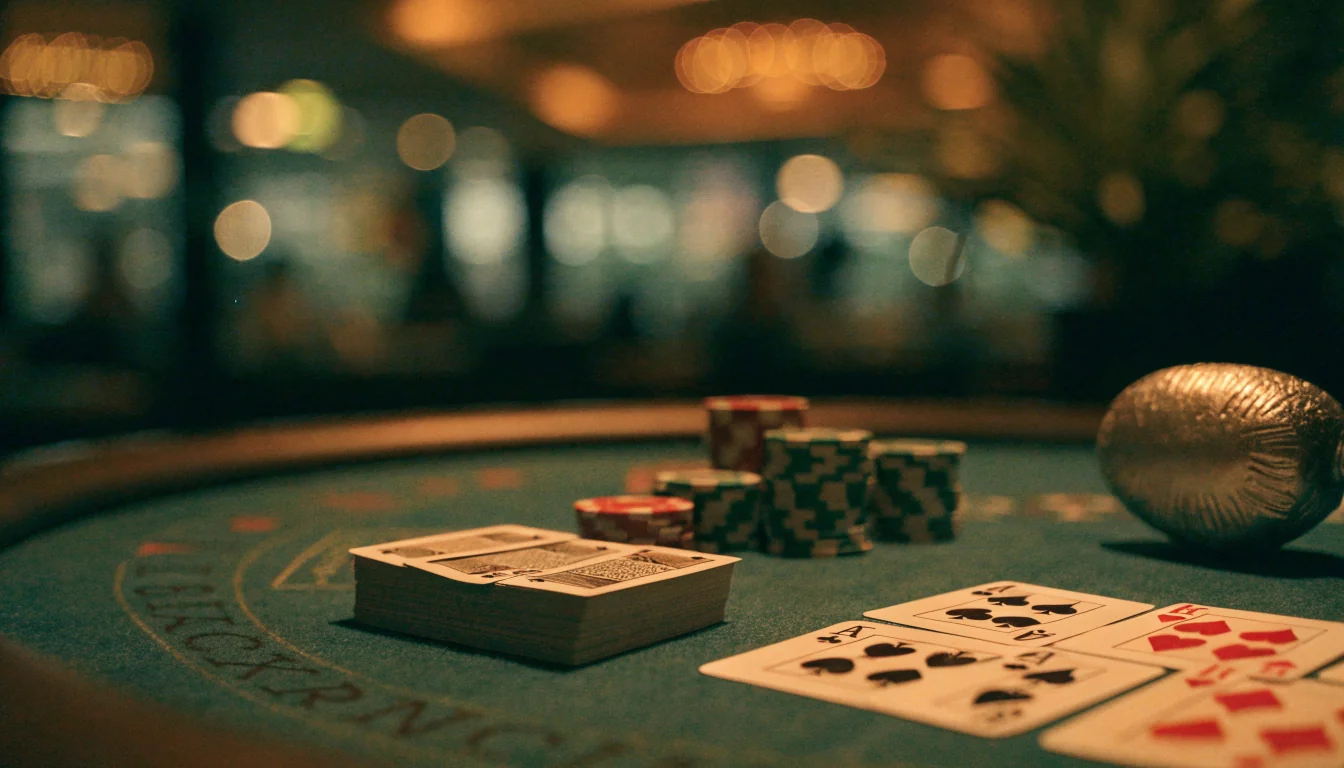
This distinction matters when you read general explanations of casino mathematics or compare figures quoted for different games. A house-edge percentage, where one is established for a particular game and conditions, refers to wagering volume. It is not a forecast of what one player will lose from a particular starting balance. Nor does knowing your initial funds establish the total amount placed in bets.
For online slot betting, the distinction is useful as a way to read the measure accurately, not as a slot strategy. A house-edge definition alone does not establish the house edge, odds, or expected result for a particular slot. Without those game-specific values, applying a percentage from another game to slot wagers would produce an unsupported estimate. The calculation’s reference point can be explained; a slot-specific result cannot be inferred from it.
A clear record can keep the terms from blending together: note the balance available at the start separately from the stakes placed during play. If you later encounter a house-edge figure, check what game and conditions it describes, and remember that its base is total wagering. Do not interpret it as a promise about the outcome of a session or as a calculation from your opening bankroll.
The practical point is narrow but important. Starting funds describe your available balance at the beginning; total wagered describes betting activity across the session. House edge is defined in relation to the latter. That definition helps you interpret casino comparisons without turning them into a prediction about your personal result—or assuming that a general figure supplies the missing mathematics for online slots.
Why Blackjack Card Counting Is Not a Slot Strategy
Card counting is a method for blackjack, where cards are dealt from a shoe and cards already dealt affect the mix of cards left to be dealt. It does not describe a way to choose or play slot games. The shared word “strategy” does not make the methods interchangeable: each depends on the structure of its own game.
In the Hi-Lo method, you keep a running count as cards appear. You then divide that count by the number of decks remaining to estimate the true count. The count is used to adjust bets as the estimated card mix changes. That sequence depends on observing dealt cards and estimating how many decks remain. Without those inputs, the method has no blackjack count to calculate.
A slot does not present a sequence of dealt cards from a shoe for a player to track in this way. The Hi-Lo steps therefore do not tell you which slot to choose, when to spin, or how to alter a slot wager. Treating them as an advantage slot play strategy would carry a blackjack procedure into a different game without a mechanism connecting the two.
The distinction also matters when advice uses broad terms such as “advantage play”. A method can be relevant only where its inputs and rules apply. For Hi-Lo, those inputs are cards dealt and decks remaining; its output is a true count used to guide blackjack bets. It is not evidence that a slot decision can produce the same kind of count or betting signal.
Card counting (such as the Hi-Lo method) is a blackjack-specific procedure that depends on tracking dealt cards from a shoe; it has no mechanism for influencing slot outcomes.
If you encounter card-counting advice while looking for slot guidance, check what game the method actually concerns. When it describes a running count, a true count, or bet changes based on cards remaining, it is blackjack advice. It should not be presented as a slot system or as a way to gain an edge on slots.
Is There a Verified Strategy for Slots in This Evidence Set?
That distinction matters: advice can sound precise without showing that a choice changes the game’s expected result. A method is not established just because it has a name, is repeated often, or gives you a sequence of actions to follow.
To call a slot approach verified, you would need evidence about the specific game and a clear explanation of how the proposed decisions affect its outcomes. Without that, claims such as choosing a particular machine, changing your stake after a result, or following a pattern cannot be presented as a way to improve your chances. Nor can a general claim about one slot be transferred automatically to another.
The word “strategy” can also describe different things. A plan for deciding when to stop is a way to manage your own play; it does not establish a method for predicting or influencing slot results. A claim about odds, by contrast, needs game-specific support. Keeping those meanings separate prevents a personal routine from being mistaken for a proven advantage.
Blackjack and video poker are identified as games with lower house advantages when played with optimal strategy, while the stated roulette figure applies to American roulette. Those details concern those games; they do not provide slot odds or establish a slot method. A rule that changes a blackjack decision cannot be transferred to slots simply because both are casino games.
Treat a confident claim about a slot strategy cautiously unless it explains which game it applies to and provides evidence for the claimed effect. Without that support, it is a claim, not a demonstrated strategy.
Learning Basic Strategy: The Verified Example Is Blackjack
If you are looking to learn a strategy for slots, blackjack basic strategy is not the answer. It is a decision method for blackjack: the action depends on the cards in your hand and the dealer’s visible card. A chart maps those details to a choice such as hit, stand, double or split. It does not describe how to play a slot machine.
To use a chart, first identify your hand, then find the dealer’s up-card and read the recommended action at their intersection. The chart helps make the decision consistent; it does not guarantee a winning hand or session. Its recommendation is meaningful only for a game whose rules match the chart’s assumptions.
Check the table rules before applying any chart. One important detail is what the dealer does with a soft 17: the dealer may be required to hit or to stand, and that difference can change the appropriate strategy. Surrender rules also matter. If surrender is available, a chart may recommend it in situations where a chart for a game without surrender gives a different action.
This is why a chart should not be treated as a universal set of blackjack instructions. A rule variation can change the decision even when your hand and the dealer’s up-card are unchanged. Confirm the relevant rules first, then use a chart designed for those rules. Do not use a chart that assumes a different table setup.
The useful lesson is about scope. Basic strategy organizes blackjack decisions around specific card information and game rules. Slots do not present a player hand and dealer up-card for those choices, so this method cannot be transferred to slot play. If you want to understand a slot game, blackjack charts provide no evidence about its mechanics or outcomes.
What is the house edge with basic strategy?
With optimal basic strategy, the house edge can be about 0.43% under the stated rules. In a typical shoe game with good rules and a 3:2 blackjack payout, it is approximately 0.5%.
How do you play online Blackjack?
Use a basic strategy chart that matches the game’s rules to decide whether to hit, stand, double, or split. The same chart can apply online, live dealer, or in person when the rules match.
What is blackjack basic strategy?
Basic strategy is a chart-based guide for deciding whether to hit, stand, double, or split based on your hand and the dealer’s up-card. The chart should match the game’s rules.
Does basic strategy work online?
Yes. You can use the same basic strategy chart online as at a live-dealer or land-based game, provided it matches the blackjack rules.
In which games do casinos hold the highest edge?
American roulette has a 5.26% house edge. Blackjack and video poker offer the lowest house advantages when played with optimal strategy.
How do blackjack house rules affect expected value?
Rules can change the house edge: a 6:5 blackjack payout adds about 1.4%, and a dealer hitting soft 17 adds about 0.2%. Basic strategy also varies with rules such as soft-17 play and whether surrender is allowed, so use a chart matched to the table.
When can you split in blackjack?
You can split a pair only on your initial two-card hand by placing a second bet equal to your original wager. Rules may limit resplitting, especially for aces; split aces usually receive only one additional card each.
When should you hit or stand in Blackjack?
The dealer must hit on 16 or lower and stand on 17 or higher. For your own hand, use a basic strategy chart matched to the rules; when the dealer shows 7 or higher, hit rather than stand on a hard 12 through 16.
Written by the editors at Casino Payment NZ.