Casino game strategies in NZ: house edge and decisions
 Available in US
See how house edge, game rules and betting choices shape expected results—and why no strategy can guarantee a win.

Table of Contents
- How House Edge Shapes a Casino Strategy
- Blackjack Basic Strategy: Make Decisions from the Hand and Up-Card
- Splitting Blackjack Pairs: When a Second Hand Changes the Risk
- How Blackjack Table Rules Change the House Edge
- Roulette Betting Systems and the Cost of Repeated Wagers
- Slots, Football and Studio Games: Keep Strategy Claims in Bounds
- Casino War Betting: Separate Wager Size from Expected Results
- Casino Bonuses: What You Can and Cannot Infer from a Strategy
- Craps and the Limits of a Casino Winning Strategy
- Martingale and Other Progressive Betting Systems
How House Edge Shapes a Casino Strategy
The house edge describes the casino’s mathematical advantage across the money wagered. It applies to your total betting activity, not simply to the bankroll you bring to the game. If you keep wagering winnings or place further bets after earlier results, those wagers add to the total amount at risk; the starting balance alone does not capture that activity.
This distinction matters because a session’s result can differ sharply from its expected result. The house edge is a long-run measure, not a prediction that you will lose a fixed share of your bankroll during one visit. Individual outcomes vary, and a player may finish ahead or behind. But as the amount wagered accumulates, the built-in advantage is applied across that larger volume of bets. A favourable short-term result does not change the underlying calculation.
Strategy affects the player’s decisions, and therefore can affect the size of the house edge. Blackjack and video poker have the lowest house advantages when played with optimal strategy. In these games, choices are part of the mathematics: a decision can change the expected return compared with another available decision. Playing optimally means using the strategy appropriate to the game, rather than assuming that a hunch or a recent result reveals what to do next.
Choosing a casino strategy starts with finding an operator whose available details you can assess before you play. Use this list as a reference point while considering what matters for your approach to casino games in New Zealand.
License: Tobique Gaming Commission, licence no. 0000002 Ricky Casino lists a licence from the Tobique Gaming Commission, licence no. 0000002. You can use that information as one point of reference when assessing the operator.
License: Curaçao Gaming Authority, licence no. OGL/2024/165/0185 BitStarz lists a Curaçao Gaming Authority licence, licence no. OGL/2024/165/0185. You can consider this licensing detail as part of your operator research.
License: 07017519840 · Payout speed: 1-3 business days Zotabet lists licence number 07017519840 and a payout speed of 1–3 business days. These details give you a licensing reference and a stated payout timeframe to consider.
License: Tobique Gaming Commission, licence no. 0000091 7Bit Casino lists a Tobique Gaming Commission licence, licence no. 0000091. You can take this information into account when reviewing the operator.
Payout speed: 1-3 business days Lamabet lists a payout speed of 1–3 business days. You can consider this stated timeframe when deciding what matters to you.
License: Malta Gaming Authority, licence no. MGA/B2C/370/2017 Play Grand lists a Malta Gaming Authority licence, licence no. MGA/B2C/370/2017. This gives you a specific licensing detail to include in your assessment.
License: Malta Gaming Authority, licence no. MGA/B2C/394/2017 N1 Casino lists a Malta Gaming Authority licence, licence no. MGA/B2C/394/2017. You can use the licence information as one part of your review.
Payout speed: 1-3 business days Wintino lists a payout speed of 1–3 business days. You can weigh this stated timeframe against your own preferences.
License: Tobique Gaming Commission, licence no. 0000064 Neospin lists a Tobique Gaming Commission licence, licence no. 0000064. You can consider this licensing detail when assessing the operator.
That does not make either game a reliable way to make money. Optimal play reduces the mathematical disadvantage; it does not remove it or determine the outcome of an individual hand. Nor does a low house edge mean that every session will be inexpensive: the amount wagered and the variation in results still matter.
A useful way to assess any casino strategy is to separate three things: the rules that define the game, the decisions you can make, and the total amount you wager. The rules set the underlying probabilities. A strategy can improve decisions where the game gives you choices. Your betting activity determines how much of the house edge is applied over time. Keeping those mechanisms distinct prevents a strategy from being mistaken for a guarantee, or a starting bankroll from being mistaken for the full measure of exposure.
Blackjack Basic Strategy: Make Decisions from the Hand and Up-Card
A blackjack basic strategy chart is a decision map. Find your hand on one axis and the dealer’s visible card—the up-card—on the other. The cell where they meet tells you whether to hit, stand, double or split. The chart does not predict the next card; it gives a recommended action for the hand and up-card you have.
Use the chart for the game in front of you, rather than treating one card as a universal answer key. Basic strategy depends on the rules being used, so check the table rules before applying a chart. The same chart can work for online, live dealer and land-based blackjack if it matches the game’s rules.

Read the hand before choosing an action
Start by identifying your hand as hard or soft, then locate its value on the chart. A soft hand contains an ace counted as eleven without taking the total above 21. A hard hand has no ace counted that way. This distinction matters because the same displayed total can call for different decisions depending on the cards that make it up.
Next, find the dealer’s up-card. The chart’s recommendation comes from the combination of your hand and that card—not from your total alone. A player’s total that looks strong may still need another card against one up-card, while a weaker total may call for standing against another. The dealer’s card matters because it affects how likely the dealer is to need additional cards.
The dealer follows a fixed drawing rule: the dealer takes another card on 16 or lower and stops on 17 or higher. Your decision is made before the dealer completes the hand. A chart lets you account for that rule consistently instead of relying on a general impression that your hand is “good” or “bad.”
What each chart action means
Hit means take another card. It is the chart’s instruction when your current hand needs another chance to improve, despite the risk that the added card could push the total above 21.
Stand means take no more cards and let the dealer complete their hand. Standing avoids the risk of exceeding 21 yourself, but it does not prevent the dealer from making a stronger hand.
Take another card when your current hand needs another chance to improve, despite the risk of exceeding 21.
Take no more cards and let the dealer complete their hand to avoid the risk of busting yourself.
Increase your wager and take one card when the hand and up-card make this action appropriate.
Separate a pair into two hands by adding a second equal bet, playing each hand separately.
Double means increase your wager and take a card under the game’s doubling rules. The chart indicates when the hand and up-card make this action appropriate; it is not simply a general way to increase a bet when you feel confident.
Split applies when your initial hand is a pair and the chart calls for two hands. The decision is based on the pair and the dealer’s up-card. Splitting changes the structure of the hand, so follow the chart rather than assuming that every pair should be divided. The mechanics and added exposure of splitting deserve separate consideration.
The hard 12–16 decision against a high up-card
One difficult spot is a hard total from 12 through 16 when the dealer shows 7 or higher. In that situation, the recommended action is to hit rather than stand. The hand may feel uncomfortable to play because another card can take you over 21. But standing leaves the dealer to draw according to the rules, and the up-card is strong enough that the chart does not recommend simply holding a hard 12–16.
Apply this instruction to the specific hard totals in that range; do not extend it automatically to soft hands or to other dealer cards. The chart’s purpose is to separate situations that can look similar at a glance. A total alone is not a complete decision: hand type and dealer up-card both matter.
Use the chart as a process, not a promise
For each decision, identify the hand, locate the dealer’s up-card, then follow the matching chart cell. If you are unsure which row applies, pause to classify the hand before acting. This repeatable process is more reliable than choosing based on a recent result or a hunch about what card will come next.
Basic strategy is a way to make decisions consistently, not a method that guarantees a win on a hand or session. Under the stated rules, using it reduces the house edge to 0.43%; that figure describes the game’s mathematical advantage over continued play, not the result of any one round. Your actual hand can still lose after you make the chart’s recommended decision.
Whether you play online or at a live dealer table, the central task is the same: match your hand and the dealer’s up-card to a chart that fits the table rules. A chart cannot compensate for a mismatch between its assumptions and the game being played, so check the table rules first.
Splitting Blackjack Pairs: When a Second Hand Changes the Risk
Splitting changes the shape of a blackjack wager. It is an option on your initial two-card hand: if the cards form a pair and the table permits the move, you can separate them into two hands. You must add a second bet equal to your original wager. The dealer then gives an additional card to each new hand, and each is played separately.
That extra hand is not free. Your total amount at risk increases because you have committed another equal wager, and the two hands can produce different results. Splitting therefore increases both exposure and variance: the outcome can differ more from what one hand alone would have produced, but the extra hand does not make a favourable result certain.
Splitting increases both exposure and variance because you must commit an additional equal wager, which increases the total amount at risk.
A blackjack strategy chart can show whether splitting is appropriate for a particular pair against the dealer’s up-card. The chart is a decision aid, not a general instruction to split every pair. Its recommendation depends on the hand and the dealer’s visible card. If the chart calls for another action, splitting simply because the cards match may be the wrong choice.
Why some pairs are poor candidates
Splitting 4s, 5s, and 10s is generally not recommended because separating these pairs rarely improves the odds. A pair is not automatically a reason to create a second hand. Before splitting, consider the specific decision shown for that pair and up-card, as well as the additional wager the move requires.
This distinction matters with 5s: treating them as a pair to split can overlook the value of keeping the original hand together. With 10s, separating a strong combined hand creates two new hands instead of preserving the cards as dealt. With 4s, the split rarely provides enough improvement to justify the extra exposure. These are general recommendations; the chart matched to the hand and dealer’s up-card provides the relevant decision.
Online blackjack uses the same basic idea, but the chart you consult must match the game’s rules. A chart is useful only when its assumptions fit the table. Check the table rules before applying a strategy, and do not treat a chart for one game as universal.
The practical decision has two parts: whether splitting is the recommended play for the hand, and whether you are prepared to place the required second wager. If you split, you are managing two hands rather than one, with more money exposed and more variation in the result. A correct strategic decision can improve the quality of your play, but it cannot guarantee a winning hand or session.
How Blackjack Table Rules Change the House Edge
A blackjack strategy chart is only useful when it matches the table. The payout for a natural blackjack, the dealer’s treatment of a soft 17 and whether surrender is allowed can all affect the correct decisions and the house edge. Check the table rules before using a chart; a chart built for different conditions may recommend the wrong play.

The blackjack payout matters because a natural is not paid the same way at every table. With a 3:2 payout and favourable rules, basic strategy leaves the house edge at roughly half a per cent in a typical shoe game. A 6:5 payout makes the game less favourable: it adds about 1.4 percentage points to the house edge. That change applies even if you make the same decisions correctly, so a 6:5 table is not an equivalent substitute for one paying 3:2.
The dealer’s soft-17 rule also affects the calculation. A soft 17 contains an ace counted as 11 without busting. If the dealer must hit that hand rather than stand, the house edge rises by about 0.2 percentage points. The difference may look small beside the payout effect, but it changes the conditions on which strategy advice is based.
Surrender rules matter for the chart as well. A chart may account for whether you can surrender a hand, while another assumes that option is unavailable. Soft-17 treatment also changes chart recommendations. These details are not optional fine print: they define which decisions the chart evaluates.
When comparing tables, read the payout and dealer-rule wording first, then confirm whether surrender is offered. Match all of those conditions to the strategy chart before using it. Do not treat a chart labelled “basic strategy” as universal, or interpret expert gaming advice as a promise of winning online casino strategies. Correct decisions can reduce the house edge under the relevant rules; they cannot remove it or guarantee a winning hand or session.
Roulette Betting Systems and the Cost of Repeated Wagers
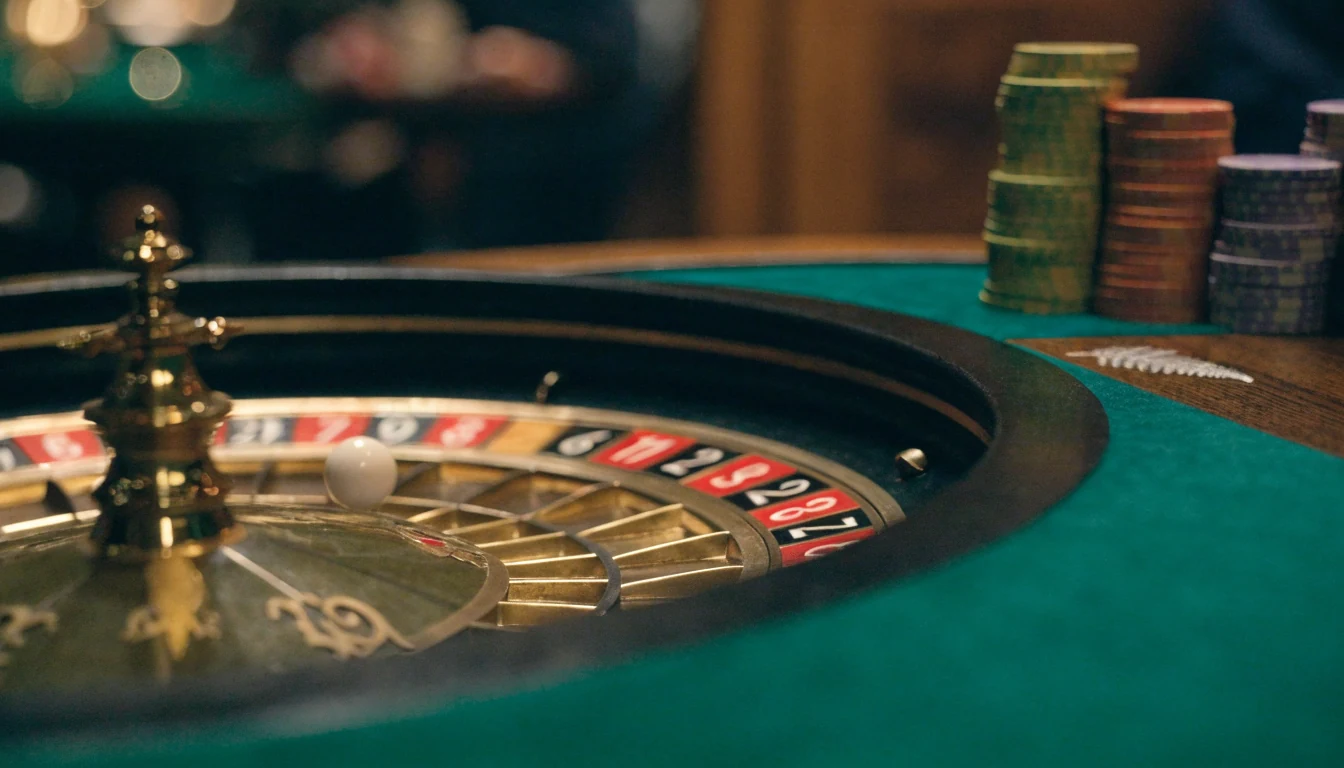
A roulette betting system can change which wagers you make, how much you place on them, or how you respond to earlier results. It cannot remove the cost built into the game. American roulette has a house edge of 5.26%. That edge applies to the total amount wagered over play, not simply to the money you bring to the table.

This distinction matters because a bankroll is not the same as total betting activity. If you reuse winnings or return money from earlier wagers to the table, the sum of all wagers can exceed your initial funds. The house edge is measured against that cumulative action. A player who starts with a fixed bankroll therefore cannot assess the game’s cost by looking only at the amount initially set aside.
What a betting pattern can change
A pattern may determine whether you keep your stake level, alter it after a result, or move between different available wagers. Those choices affect the path your bankroll takes: the amount at risk on each turn can vary, and the balance may rise or fall in a different sequence. But a change in sequence is not a change in the game’s house edge.
That is the key test for any proposed roulette strategy. Ask whether it changes the underlying cost of wagering or only changes the way you distribute wagers across play. A staking pattern belongs to the second category. It may affect how quickly you use your budget and how much fluctuation you experience, but it does not turn the game into a reliable route to a win.
A flat betting approach keeps the stake unchanged from one wager to the next. A changing-stake approach adjusts it according to a rule. Either way, the house edge still applies to the total amount wagered. A rule that says to increase a stake after a loss, reduce it after a win, or switch the wager being made does not cancel that edge.
Why the starting bankroll is an incomplete measure
Suppose you judge a session only by whether your final balance is above or below the amount you started with. That describes the result for your bankroll, but it does not show how much wagering generated that result. The same starting amount can support different totals of betting activity depending on how often funds are wagered and whether money is put back into play.
For that reason, a system that appears to produce frequent small wins should not be evaluated by those wins alone. The relevant measure is the full run of wagers, including stakes made after earlier results. A temporary increase in balance does not establish that the system has improved the game’s underlying expectation. Nor does a losing sequence prove that changing the pattern would have removed the house edge.
The house edge in American roulette (5.26%) applies to the total amount wagered over the course of play, not just the initial bankroll you bring to the table.
The 5.26% figure for American roulette is not a prediction that a particular session will lose a fixed share of the player’s starting bankroll. It describes the game’s house edge in relation to total wagering. Individual results can differ, but a staking rule cannot make the edge disappear.
Treat “double up” rules with care
A double-up approach changes the stake in response to results. Its name may make the method sound as if a later win can undo earlier losses, but that is not the same as securing an overall profit. A larger wager puts more money at risk on that wager; it does not alter the house edge applied to the total action.
The same reasoning applies to other systems that increase or decrease stakes according to a sequence. The system’s instructions may be precise, but precision in a betting rule does not make its outcome dependable. Before using any roulette pattern, separate two questions: what does the pattern tell you to wager next, and does it change the game’s cost? It can answer the first. The house edge shows why it cannot promise the second.
Use a budget, not a prediction
A roulette strategy is best treated as a way to organise wagers, not as a forecast of the next result. Decide how much you can afford to lose and set a time limit before playing. Keep those boundaries separate from any pattern’s instructions: a system should not be a reason to raise your budget, extend your session, or keep playing to recover losses.
If you compare roulette approaches, focus on what each one actually changes: stake size, wager selection, or the point at which you stop. Do not treat a sequence of past results as evidence that a particular pattern will secure a future win. In American roulette, repeated wagering continues to carry the stated house edge, whatever pattern is used.
Slots, Football and Studio Games: Keep Strategy Claims in Bounds
The phrase “casino strategy” can refer to very different kinds of play. A plan that concerns one game should not be treated as a method for slots, football-themed products and studio games alike. The labels describe broad categories, not a shared set of decisions. Without knowing how a particular game works, you cannot assume that a tactic from another category applies to it.

This matters when a product combines familiar themes with casino-style play. Football imagery does not, by itself, tell you what choices the game offers or how those choices affect the result. “Studio game” is also too broad to establish that its play works like a slot or another casino game. A strategy claim needs to relate to the actual game and its rules; a general label is not enough to support that claim.
For slots, avoid treating a betting pattern as a way to control what happens during play. A strategy name does not establish that it can change a game’s results. The same caution applies to football-themed products and studio games: do not transfer a method simply because the product is offered in a casino setting or shares a theme with another game.
A practical plan can still set limits on your own play. Decide your spending budget before you start, and set a time limit as well. These limits govern how much time and money you choose to put at risk; they do not predict or improve a game’s results. Stop when either limit is reached rather than changing the plan in response to what has happened.
Only play with money you can afford to lose. Never increase your budget to recover spent money or use funds reserved for essential expenses.
Only play with money you can afford to lose. That means treating the budget as an amount you may not get back, rather than money reserved for essential expenses or a future obligation. Do not increase it because a session feels promising, or because you want to recover money already spent. A strategy label cannot make those decisions risk-free.
If you are comparing a slot, a football-themed casino product and a studio game, assess each one separately. Do not assume they have the same rules, the same decisions or a strategy that carries across all three. Keep the distinction clear between a personal limit—which you can set in advance—and a claim about influencing results, which needs support specific to the game.
There is no single casino strategy that can be applied across every format merely because each appears in a casino. When a claim does not explain which game and which decisions it concerns, it is not a sound basis for changing your play. Keep your budget and time limit fixed, and play only with money you can afford to lose.
Casino War Betting: Separate Wager Size from Expected Results
Casino war calls for a separate approach from blackjack or roulette. A betting method built around decisions in another game does not automatically apply here. Keep the focus on what you control: how much of your own money you are prepared to risk, and how long you intend to play.
Wager size and expected results are different things. Choosing a larger or smaller stake changes the amount exposed on a wager; it does not, by itself, show that the chance of a favourable result has changed. A casino war betting strategy should not treat a change in stake as a way to make a win more likely or to recover money already lost.
Before you begin, decide on a spending budget and a time limit. The budget is the maximum amount you are willing to lose, not a target you need to use. The time limit gives the session a clear endpoint even if the budget has not been reached. If either boundary is reached, stop rather than extending the session because results have been disappointing or because a win feels close.
It can help to think about these limits separately from individual wagers. A stake may look small in isolation, but repeated play can use more of your budget than you intended. Keep track of your total spending and the time spent playing, rather than judging the session only by its latest result. If you find yourself changing the limits during play, that is a reason to pause or end the session, not to raise the stake.
Do not borrow blackjack decisions or roulette betting patterns and label them a casino war system. Those approaches address different games; applying their names does not make them suitable here. A sound plan for casino war is therefore deliberately narrow: set limits in advance, keep each wager within the budget you chose, and stop when the time or spending boundary is reached.
Only play with money you can afford to lose. Treat any result as uncertain, and do not make essential spending depend on a session going well. The practical value of a plan lies in keeping play within boundaries you chose beforehand, not in claiming that a particular wager size can control the outcome.
- Set a spending budget in advance
- Establish a clear time limit for the session
- Stop playing once either boundary is reached
- Borrow strategies from blackjack or roulette
- Change limits during play to chase losses
- Use wager size as a way to influence results
Casino Bonuses: What You Can and Cannot Infer from a Strategy
A casino bonus is an offer attached to play; it is not a method for changing how a game works. A strategy for choosing actions within a game cannot, by itself, establish whether an offer is available to you, what conditions apply, or whether the offer improves your overall position. Those points depend on the actual offer details, not on the name given to a strategy.
Treat the offer and the game as separate parts of a playing plan. First, read the terms shown with the specific bonus. Check who can use it, which games or wagers it applies to, what conditions must be met, and whether there is an expiry date. Do not assume that any of these details are standard across offers. If a condition is unclear or absent from the information presented, do not fill the gap with an assumption.
No-deposit offers
A no-deposit bonus strategy cannot be assessed from the label alone. The phrase does not tell you what the offer permits, whether you qualify, or whether any conditions affect how you can use it. Before making a plan around one, find the specific offer and read its terms in full. If you cannot confirm the conditions that matter to your decision, do not treat the bonus as usable funds or as a reason to extend play.
The same distinction applies to the games covered by an offer. Do not assume that a bonus applies to every game, or that a game’s usual strategy applies unchanged when the offer imposes separate conditions. Use only information stated for that offer and the game itself.
Volatility is not a measure of bonus value
A high-volatility game label does not tell you the value of a bonus or whether using the offer is suitable for your plan. It describes neither the offer’s conditions nor your eligibility. A strategy based on that label alone therefore cannot answer the practical questions: what you may do with the bonus, what requirements apply, and what happens if those requirements are not met.
Keep the decision concrete. Read the offer details before relying on a bonus; if the terms do not support the plan you had in mind, leave the bonus out of that plan. Do not increase your budget or playing time because an offer is described as valuable, generous, or suitable for a particular game. Those descriptions do not replace the conditions you need to check.
A bonus can be considered only after its actual terms are clear. Until then, no reliable conclusion about its usefulness follows from a game strategy, a no-deposit label, or a volatility description.
Craps and the Limits of a Casino Winning Strategy
A craps approach cannot guarantee that you will win a hand or finish a session ahead. A plan can define how much time and money you are prepared to spend, but it cannot control the outcome of a game. Treat claims of a certain route to a win with caution: confidence in a method does not change what happens during play.
Before sitting down, choose a spending limit and a time limit. Use money you can afford to lose, and decide in advance what you will do when either limit is reached. For instance, you might leave when your planned session time ends even if you are ahead, or stop when the amount you set aside for play has been spent. The useful part is making that decision before the result of the next hand can influence it.

Keep the spending limit separate from money available for other needs. Do not treat a win as extra permission to extend the session, or a loss as a reason to add funds. Those choices turn a fixed plan into a moving target. If you find yourself reconsidering the limits during play, pause and leave rather than negotiating with yourself at the table.
A simple written plan can make the limits easier to follow. Record the amount reserved for play, the time at which you intend to stop, and the conditions that end the session. Keep the plan brief enough to check without interpreting it. If you are playing online, use a timer away from the game; if you are at a table, decide how you will monitor the time before play begins. These steps do not improve the odds of a particular hand. They help prevent an unplanned session from continuing beyond the boundaries you chose.
The phrase “strategy to win at craps” can suggest that there is a sequence of choices that guarantees a favourable result. That is not a sound expectation. No strategy should be presented as a way to secure a winning hand or session. A disciplined plan is narrower: it controls your intended spending and play time, not the game’s outcome.
You do not need to find a complicated system before deciding whether to play. If you cannot set limits you are willing to keep, do not start a session. If you do play, stop when either limit is reached. That rule remains the same whether the session has gone as planned or not.
Martingale and Other Progressive Betting Systems
A progressive betting system changes the size of a wager in response to earlier results. In a Martingale, you raise your stake after a loss, intending to recover previous losses when a later wager wins. Other progressions may increase stakes after wins or follow a fixed sequence. These methods alter how much you wager and when; they do not change the game’s underlying probabilities.

The key distinction is between your starting bankroll and your total action. The house edge applies to the money wagered across play, not just the amount you brought to the table. If a progression leads you to place larger or more frequent bets, it can increase the total amount exposed to that edge. A winning wager may offset earlier losses, but it cannot ensure that a win will arrive before you stop or can no longer continue.
A Martingale also depends on being able to keep increasing the stake after losses. In actual play, your available funds and the table’s permitted stakes constrain that sequence. If either prevents the next increase, the intended recovery pattern breaks. Even when you can continue, a run of losses means more money is committed before any recovery wager succeeds. The system therefore changes the distribution of possible outcomes: it may produce frequent small wins alongside the risk of a much larger loss, rather than making the game favourable.
Flat betting avoids stake increases triggered by results, but it does not remove the house edge or guarantee a profit. Nor does switching to a different progression. Treat a staking pattern as a way of organising wagers, not as a method for predicting outcomes or securing a return.
Set a budget and a time limit before you play, and use only money you can afford to lose. Do not raise your budget to continue a progression or chase losses when the sequence goes against you. Casino marketing strategies, such as how an operator presents its products, are separate from a player’s betting method; neither promotional language nor a staking sequence changes the mathematical effect of repeated wagers.
What is the house edge with basic strategy?
With basic strategy, blackjack’s house edge can be about 0.43% under the relevant rules, or approximately 0.5% in a typical shoe game with good rules and a 3:2 blackjack payout. The exact figure changes with rules such as the payout and whether the dealer hits soft 17.
What is blackjack basic strategy?
Blackjack basic strategy is a chart that recommends whether you should hit, stand, double or split based on your hand and the dealer’s up-card. Use a chart matched to the table rules.
When can you split in blackjack?
You can split a pair on your initial two-card hand by placing a second bet equal to your original wager. Whether to split depends on your pair and the dealer’s up-card; follow a chart matched to the table rules.
When should you hit or stand in Blackjack?
Use a basic strategy chart matched to the game rules and choose according to your hand and the dealer’s up-card. In particular, hit a hard 12 through 16 when the dealer shows 7 or higher.
Published by the Casino Payment NZ team.