European Roulette in New Zealand: Odds and Play
 Available in US
A guide to wheel probabilities, payout tables, betting systems and checks for online roulette in New Zealand.

Table of Contents
- How a European Roulette Wheel Sets the Odds
- What Free European Roulette Play Can—and Cannot—Show You
- European vs American Roulette: The Zero That Changes the Edge
- Reading the Table and Its Payouts
- European Roulette Odds: What Each Spin Can Tell You
- Playing European Roulette Online: What to Check Before a Session
- Roulette Strategy and the Limits of Betting Systems
- European Roulette Online in New Zealand: The Licensing Framework
- How to Place a European Roulette Bet
- Roulette Bonuses: Read the Conditions Before You Accept
How a European Roulette Wheel Sets the Odds
A European Roulette wheel has thirty-seven pockets: one marked zero and the others numbered. The wheel is the source of the game’s probability structure. The table displays places to bet, but it is the set of pockets on the wheel that determines which result can occur. Online, the same distinction applies whether you open a free game or play for real money.
The house edge for European Roulette is 2.70%. This figure describes the mathematical advantage built into the game’s payouts over repeated play. It does not mean that the house keeps that share of every stake, or that a particular spin will produce a predictable loss. A single result can go either way; the edge describes the long-run relationship between the available outcomes and the returns the rules assign to them.
To see where that edge comes from, consider the wheel and the payout rules as one system. The zero is a pocket alongside the numbered outcomes. Bets that win when particular numbers or groups of numbers appear do not receive returns that fully compensate for every possible outcome. The difference between the true probabilities and the payout schedule creates the house edge. The wheel alone supplies the probabilities; the rules for returning winning stakes determine how those probabilities translate into the game’s mathematical cost.
Choosing European roulette in New Zealand means checking the details that matter to you before you play. Use these short verdicts as a starting point for reviewing each option.
License: Tobique Gaming Commission, licence no. 0000002 Ricky Casino lists a Tobique Gaming Commission licence, number 0000002. You can use that detail when checking its licensing information.
License: Curaçao Gaming Authority, licence no. OGL/2024/165/0185 BitStarz lists a Curaçao Gaming Authority licence, number OGL/2024/165/0185. You can refer to this identifier when reviewing its licensing details.
License: 07017519840 · Payout speed: 1-3 business days Zotabet lists the licence identifier 07017519840 and a payout speed of 1–3 business days. These are the available details to consider when reviewing the operator.
License: Tobique Gaming Commission, licence no. 0000091 7Bit Casino lists a Tobique Gaming Commission licence, number 0000091. You can use the licence information as one point in your review.
Payout speed: 1-3 business days Lamabet lists a payout speed of 1–3 business days. This gives you a stated payout timeframe to factor into your review.
License: Malta Gaming Authority, licence no. MGA/B2C/370/2017 Play Grand lists a Malta Gaming Authority licence, number MGA/B2C/370/2017. You can check this identifier as part of your review.
License: Malta Gaming Authority, licence no. MGA/B2C/394/2017 N1 Casino lists a Malta Gaming Authority licence, number MGA/B2C/394/2017. You can refer to that detail when checking its licensing information.
Payout speed: 1-3 business days Wintino lists a payout speed of 1–3 business days. You can consider this stated timeframe when reviewing the operator.
License: Tobique Gaming Commission, licence no. 0000064 Neospin lists a Tobique Gaming Commission licence, number 0000064. You can use that information as part of your review.
This is why the displayed payout for a winning bet cannot be judged in isolation. A large return may be attached to an outcome that is less likely, while a bet covering more possible results may pay less when it wins. The relevant question is how often the covered result can occur compared with the return specified by the game. Across the full set of available bets, the standard European Roulette structure produces the stated edge.
An online European Roulette game represents this mechanism digitally. The interface may animate a ball, show a wheel, or present controls for selecting bets, but those visual details do not alter the underlying pocket structure. A free European Roulette game online can use the same basic wheel and payout logic as a real-money version. The difference between the modes is whether your balance represents practice credits or money you can lose, not whether the single-zero design has a different mathematical edge.
That distinction matters when you use an online European Roulette simulator to understand the game. A simulation can show how the wheel’s outcomes interact with its rules, but it cannot make the house edge disappear. Nor does a sequence of favourable results demonstrate that the underlying odds have changed. The calculation belongs to the game’s structure, not to the appearance of a particular session.

People looking for an online European Roulette cheat or a way to win every time are asking for an outcome that the wheel’s design cannot provide. No interface setting or betting choice changes the number of pockets or the house edge built into the standard game. A real-money bet can lose, and a winning result does not establish a method for controlling later play. Treat claims of guaranteed wins as inconsistent with the mechanics rather than as evidence of a hidden advantage.
The percentage is also not a prediction of how much you will lose in an individual session. Results vary, and the house edge is a theoretical measure calculated across play under the game’s rules. If you stake money, the practical consequence is that the game is structured to favour the house over the long run, even though a player may win or lose in any particular session. Free play removes the financial stake, but it does not change the wheel’s mathematical design.
When you assess an online European Roulette game, begin with its wheel structure and stated rules rather than its graphics or presentation. The single zero and the payout schedule together explain the 2.70% house edge. That is the baseline for understanding the game in either free or real-money form; it is not a promise about the result of a spin.
What Free European Roulette Play Can—and Cannot—Show You
A free European Roulette game lets you use a practice balance rather than stake your own money. That changes the consequences of a spin, not what the spin represents: the game still produces a roulette result, but any practice balance or win shown on screen is not cash you can withdraw.
A free European Roulette game uses a practice balance rather than your own money; any wins shown on screen are not cash you can withdraw.
The main value is learning the interface. You can find the betting area, select a chip value, place a wager and see how the game records it before the wheel is spun. You can also watch how the result is displayed and how the practice balance changes afterwards. These steps can make the controls familiar before you decide whether to play for money. They do not provide evidence that a particular number or type of bet is more likely to win.
What practice can help you learn
A free session is useful when you want to understand the order of actions. Depending on the game, you may be able to choose a chip, click or tap a betting position, adjust a selection, and remove it before the spin begins. Repeating those actions helps you see how the interface responds. If you are using a phone or tablet, practice can also show whether the controls are easy for you to use on that screen.
You can follow the full cycle from bet placement to result and settlement without putting money at risk. That may help you recognise which parts of the screen show your current selections, the latest result and the practice balance. Take time to read the labels rather than assuming that every control works the same way across different games.
Some games are available to play in a browser without a download; others may require a different access method. Where a free version is offered, check that it is clearly identified as practice play before starting. A free game is not necessarily the same thing as a promotion that awards free spins. Promotional spins may have separate conditions, while a practice mode uses no cash stake and does not create withdrawable winnings.
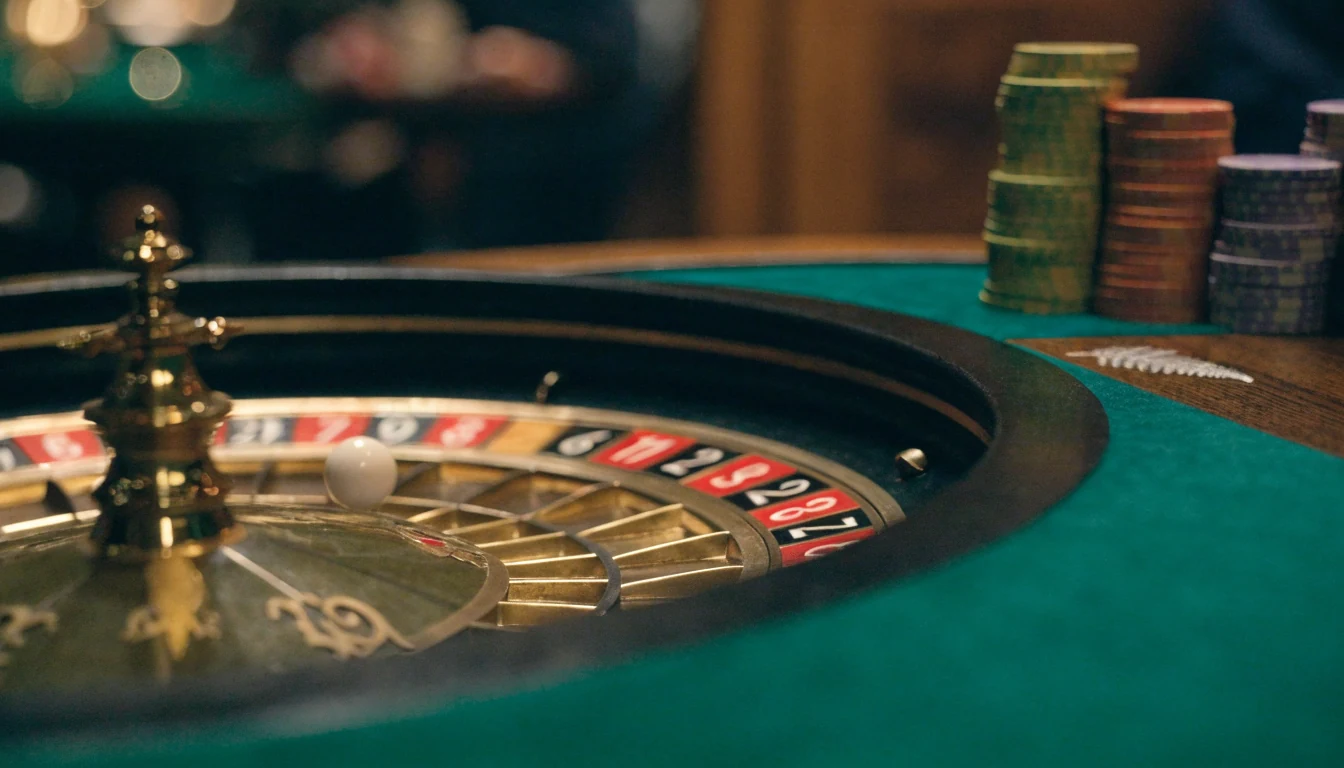
A live-dealer free option, if a provider offers one, can let you observe a streamed table and practise using its controls. It still does not turn practice results into a forecast. The key distinction is whether you are watching or staking real money, not whether the wheel appears on a screen or at a live table.
What a free session cannot establish
A run of practice spins cannot tell you what will happen in a later session. Roulette spins are independent: earlier results do not alter the probability of outcomes on future spins. A pattern that appears in a short session is a record of what happened there, not a signal that the next result is due to change.
The same applies to practice wins and losses. A win does not prove that a bet is reliable, and a losing run does not mean a win is owed. The practice balance can also make the experience feel different from real-money play: it has no cash value, so gaining or losing it does not reproduce the financial consequences of a real stake. Free play can teach you how to operate a game; it cannot measure how you will respond to risking money.
Nor should a session be treated as a test that predicts the behaviour of a different roulette game. Interfaces, presentation and available controls can vary. Confirm that the game is European Roulette and learn its controls on that version rather than assuming that familiarity with one interface transfers exactly to another.
Use practice for a narrow purpose: become comfortable with the controls, follow how a spin is presented, and understand that the displayed balance is not real money. When you finish, the outcomes remain past results, not instructions for what to bet on next. If you later choose to play for money, remember that every real-money bet can lose and do not risk more than you can afford to lose.
- Use practice play to learn the interface
- Familiarise yourself with betting controls
- Read labels to understand how controls work
- Assume practice results predict future spins
- Treat practice wins as evidence of a reliable bet
- Use free play to measure your response to risk
European vs American Roulette: The Zero That Changes the Edge
The main difference between European and American Roulette is one pocket. That extra pocket changes the chance that any given number will appear, and therefore changes the house edge across the standard bets. The table may look familiar in both versions, but the wheel determines the probabilities.
A European wheel has 37 pockets, with a single zero. An American wheel has 38: it adds a double zero alongside the single zero. The extra pocket does not add another winning number to a bet. Instead, it adds another result that can make most bets lose. That is why the American layout is less favourable to the player under the standard rules.
The house edge is 2.70% on European Roulette and 5.26% on American Roulette. In practical terms, the edge represents the casino’s mathematical advantage over repeated play, not a prediction of what will happen in one session. The difference comes from the wheel layout: standard payouts do not compensate for the additional losing pocket on the American wheel.
A specialist review reports payout percentages of 97.30% for European Roulette and 94.70% for American Roulette. These figures describe the theoretical return associated with the stated house edges; they are not a promise about the outcome of an individual session. A particular run of spins can produce results above or below either percentage.
The distinction matters even when you place the same kind of bet on both games. A single-number bet, for instance, has to contend with every pocket that is not the chosen number. Because the American wheel has an additional pocket, the chance of that bet winning is lower there, while its standard payout does not rise to offset the difference. The same structural disadvantage applies to other standard bets: the extra zero pocket affects the wheel’s probabilities, not just the appearance of its layout.
French Roulette is related to European Roulette but is not identical to it. It uses the same single-zero wheel layout, yet can add rules that change what happens to certain bets when zero lands. La Partage and En Prison apply only to even-money outside bets in that situation. Under La Partage, half the stake is returned and the other half is collected. Under En Prison, the bet carries forward: a win on the next spin returns the original stake without extra winnings, while a loss means the stake is collected.
When either rule applies, the house edge for French Roulette falls to 1.35% on the eligible even-money bets. That lower edge is conditional on the rule and the bet type; it does not make every bet on a French table equivalent to a European Roulette bet. Check the game’s rules before playing, because the wheel layout alone does not tell you how a zero affects your stake.
If you are comparing versions, start with the pocket count, then check the zero rules and the stated payouts. European Roulette has the lower standard house edge than American Roulette because it has one fewer pocket. French Roulette shares the European single-zero layout, but its special rules can further reduce the edge on qualifying even-money bets.
Features a single-zero wheel with a house edge of 2.70%.
Features a double-zero wheel with a higher house edge of 5.26%.
Uses a single-zero wheel and can reduce the edge to 1.35% on even-money bets via La Partage or En Prison.
Reading the Table and Its Payouts
A European Roulette table is a map of betting positions. The numbered grid represents individual numbers and groups of numbers; separate areas represent outside bets such as colours or odd and even. The layout shows where a bet can be placed, while the paytable explains what a winning bet returns under that game’s rules. These are related parts of the interface, but they answer different questions.
When you play European Roulette online, the table may be resized or rearranged for a mobile screen. The underlying positions still have the same meaning. A paytable may appear beside the game or in its information panel. Check that it belongs to the specific roulette game you have opened, rather than assuming every version displays payouts in the same way.
Table positions and wheel positions
Most bets are selected by placing a chip on a marked part of the table. A number bet uses an individual number square; a group bet covers a set of numbers indicated by the layout. This visual grid is not the wheel itself. Called bets are grouped by the positions of numbers around the wheel, not by their positions on the table. Their names therefore describe wheel relationships, even if the interface lets you select them through a separate menu.
That distinction matters when you inspect a game’s controls. A table position tells you what outcome your chip covers. A called bet refers to a grouping based on the wheel’s arrangement. If the game provides a dedicated selector for called bets, use its description to confirm which wheel numbers are included instead of inferring the group from nearby squares on the grid.

What the paytable tells you
The paytable gives the return attached to each winning bet type. Read the entry for the bet you have selected, and check whether the displayed figure describes winnings alone or the full amount returned, including the original stake. The interface should make the convention clear; if it does not, do not assume the two descriptions are interchangeable.
The paytable is also distinct from the game’s overall payout percentage. A specialist review reports a 97.30% payout percentage for European Roulette and 94.70% for American Roulette. Treat those figures as review-reported summaries, not as a promise about a particular session or a statement that every individual bet returns that share. A payout percentage describes an aggregate measure for the game, whereas a paytable entry applies to a specific winning bet.
If you are using European Roulette play money, the display can help you learn where bet types sit and how the game presents their returns. The same distinction applies when you play live European Roulette or use a digital game: the table shows selection points, and the paytable explains the listed returns. A mobile layout may compress those details, so open the game information before relying on a label alone.
For “what does zero pay” in European Roulette, first identify which bet you mean. A straight-up bet on zero and a bet whose result depends on zero are different selections, so the relevant paytable entry depends on the position covered. The zero square is a table position; it does not by itself describe every bet affected when zero appears.
European Roulette Odds: What Each Spin Can Tell You
European Roulette odds describe two different things: the chance that a particular outcome occurs, and the game’s built-in advantage over time. These are related, but they are not interchangeable. A bet can win on an individual spin even though the game retains a mathematical edge across repeated play.
The house edge is a theoretical long-run measure and not a prediction of your loss in any individual session.
The European wheel has 37 pockets, including one zero. Its house edge is 2.70%. This is a long-run measure of the game’s expected advantage, not a prediction that you will lose that share of your stake on every spin. A single result may produce a win or a loss; the edge becomes meaningful across many wagers and does not determine the outcome of any particular one.
What odds say about an individual result
Each bet covers a defined set of outcomes. A bet that wins if many pockets produce the required result has more possible winning outcomes than one that depends on a single number. That difference affects how often the bet can win, while the payout is structured in relation to the result covered. The odds therefore need to be read as a relationship between the chance of winning and what the game pays—not as a promise of regular returns.
The zero matters because it is one of the possible outcomes on the European wheel. It can defeat bets that otherwise cover several numbered pockets, such as bets on a colour or an even-or-odd result. Those bets are not certain simply because they cover many outcomes: the zero remains outside those groups.
The same principle applies when you assess call bets or other named selections. The label does not change the wheel’s outcomes or make a result more likely. What matters is which pockets would count as a win, how many pockets meet that condition, and how the payout relates to that coverage. A small stake changes the amount at risk, not the probability attached to the selection.

Why previous spins do not predict the next one
Roulette spins are independent. The result of a completed spin does not alter the probability of any outcome on the next spin. If a number, colour or other result has appeared repeatedly, that sequence does not make the opposite result due. Nor does a run of losses make a win more likely on the next attempt.
This is important when interpreting a results history. It records what has already happened; it does not provide information that changes the next spin’s probabilities. A pattern may be visible in past results, but it is not evidence that the wheel will continue or reverse that pattern. Each new spin is a fresh event under the same game structure.
Use the 2.70% house edge as context for repeated play, not as a forecast for a session. It does not tell you when a win will occur, how long a losing run will last, or what your result will be. European Roulette outcomes are random, and every real-money bet can lose. Do not risk more than you can afford to lose.
Playing European Roulette Online: What to Check Before a Session
Before you start an online European Roulette session, check that the game uses the wheel layout you expect. European Roulette has 37 pockets, with a single zero. That structure matters because the game’s outcomes are tied to the pockets, not to how an online table is displayed. A game labelled European Roulette should not include a double-zero pocket.
Check Before Playing
- Confirm the game is European Roulette
- Verify the wheel has a single zero
- Ensure the game title matches the displayed wheel
- Set a loss limit you can afford
The single zero also determines the standard game’s house edge: 2.70%. The interface may present the wheel as a graphic, animate a ball, or show results in a history panel, but those presentation choices do not alter the underlying layout. If the displayed game uses a different wheel, you are not playing the same variant, even if the table looks familiar.
Check the game, not just the screen
An online table can make the wheel and betting layout appear together, but they serve different purposes. The wheel represents the possible outcomes; the table is where you select a bet. Before committing to a session, make sure the game title and displayed wheel agree. Do not assume that every roulette game in a casino lobby follows European rules simply because it uses a similar interface.
The game may be offered as a live presentation or through a digital interface. Either way, the key mechanics remain the same when the game is European Roulette: one zero pocket, and each spin produces an outcome independently of earlier spins. Animation, sound, and a list of recent results can make a sequence feel connected, but they do not change the probabilities.
Treat each spin as a separate event
Roulette spins are independent. A run of the same colour, a long gap since a number appeared, or a recent zero does not make a different outcome more likely on the next spin. The previous result is history, not an input to the next result.
This is important whether you are playing for fun or staking money. A result display can help you follow what has happened, but it cannot predict what will happen. Any “winning tips” that treat a recent sequence as evidence that the wheel is due to change mistake recorded outcomes for a mechanism that affects future outcomes. They are separate.

If you choose to play for money, set a limit you can afford to lose before starting. Every real-money bet can lose, and the independence of spins means that previous results do not protect a later stake. A larger balance or a longer session does not make a particular result due.
A practical pre-session check is therefore straightforward: confirm the game is European Roulette, verify the single-zero wheel, and understand that the recent-results panel records past spins rather than forecasting future ones. Those checks help you identify the game’s mechanics without mistaking the online presentation for a source of information about what the wheel will do next.
Roulette Strategy and the Limits of Betting Systems
A European Roulette betting strategy can determine how you divide your stake, which bets you choose and when you stop. It cannot alter the wheel’s probabilities. On a single-zero European Roulette game, the house edge is 2.70%; changing the size or order of your bets does not remove it.
A staking system changes the pattern of possible wins and losses, not the underlying chance of an outcome. A progression that raises stakes after losses may produce a run of small wins, but it also makes later bets larger while losses accumulate. If a larger bet loses, the amount at risk increases; if it wins, the payout is still determined by the bet and the game’s rules. No progression guarantees that a recovery win will arrive before a player stops or runs out of funds.
The same limitation applies to systems that increase stakes after wins, repeat a fixed stake, or switch between different bet types. These approaches can change how quickly a balance moves and how variable results feel. They cannot make a previous spin influence the next one. Roulette spins are independent, so a run of one colour does not make the other colour more likely on the following spin.
Betting Systems
No betting system can remove the house edge or guarantee a profit; every real-money bet can lose.
This is why a “best” European Roulette tactic cannot be defined as a method for beating the game. A system may suit a player’s preferred pace or help set boundaries, but it does not improve the chance of future outcomes. Treat claims of a guaranteed profit or a way to erase the house edge as claims the game’s mechanics do not support.
If you use a staking plan, assess it by asking what it changes and what it leaves untouched. It may set a stopping point or keep bet sizes consistent. It does not change the house edge, ensure a win, or prevent a losing session. Every real-money bet can lose, and results remain random regardless of how carefully you follow a pattern.
A practical limit is therefore about controlling exposure, not predicting the wheel. Decide in advance what you can afford to lose, and do not risk more than that amount. If a system encourages you to raise stakes to recover losses, abandon the plan rather than treating a larger bet as a correction. No betting system can turn European Roulette into a predictable source of returns.
European Roulette Online in New Zealand: The Licensing Framework
New Zealand’s rules for online casino gambling changed in 2026. The Online Casino Gambling Act 2026 took effect on 1 May, creating the country’s first domestic licensing system for online casino services. This framework is relevant whether a game is European Roulette, another casino game or a live-dealer table: licensing concerns the provider’s authority to offer online casino gambling, not the roulette wheel’s layout.

The Department of Internal Affairs (DIA) is New Zealand’s primary gambling regulator and oversees the online casino licensing framework. The Gambling Commission has a distinct decision-making role. It considers casino licensing applications, determines them, issues online casino licences and approves changes to licence conditions. These responsibilities should not be conflated: the DIA oversees the framework, while the Commission handles licensing decisions and specified changes.
The transition began when the Act took effect and runs until 1 December 2026. Online casinos that were already serving people in New Zealand before 1 May 2026 may continue operating during this period, subject to the Act’s transitional provisions. That temporary permission is not the same as holding a licence under the new system. The full licensed regime is expected to become operational in 2027.
The legal position before the new Act was different. The Gambling Act 2003 did not permit online casinos to be based in New Zealand. Online casino gambling supplied from offshore was not licensed or supervised by a New Zealand regulator, and customers who wagered through an offshore website had no domestic government recourse.
These changes establish a route for domestic licensing; they do not mean every website offering roulette has a New Zealand licence. During the transition, providers already operating in the market are subject to the Act’s transitional rules. The framework also sets a future compliance boundary: operators that have not applied for a licence must cease providing online casino gambling in New Zealand by 1 December 2026. Unlicensed operation is expected to become an offence around mid-2027.
Licensing Timeline
The Online Casino Gambling Act 2026 took effect on 1 May. Providers already operating have a transition period until 1 December 2026, with the full licensed regime expected in 2027.
For you, the practical distinction is between the game and the service offering it. A European Roulette table may use the familiar game format, but the New Zealand licensing framework concerns the operator’s legal status and the regulator responsible for overseeing it.
How to Place a European Roulette Bet
To place a European Roulette bet, select a chip value, then put the chip on the table position that matches the outcome you want to cover. On a physical table, you place the chip by hand; in an app or browser game, you tap or click the corresponding area. The dealer or interface records the bet before the spin begins. Once betting closes, you cannot change its position for that spin.
A chip placed on one number is a bet on that number. A chip placed on a boundary or designated area can cover a group of numbers or another defined outcome. The position of the chip determines what the bet covers, so check where it rests before confirming. If the game provides a bet summary, use it to verify the selection rather than relying on the chip’s colour or the last position you touched.
Some bets are called bets. Their names refer to groups defined by where numbers sit around the wheel, not by where those numbers appear on the betting table. That distinction matters because the table is arranged to make bet selection practical, while a called bet describes a wheel-based grouping. In a digital game, choose the called-bet control if available; otherwise, follow the displayed instructions for placing that grouping. Do not assume that nearby table positions form the same group as neighbouring pockets on the wheel.
After betting closes, the wheel spins and the ball settles in a pocket. The result is compared with each active bet: a bet wins if the settled number or outcome falls within what it covers, and otherwise it loses. A previous result does not alter the next spin; each spin is independent.

You can practise the sequence in a roulette simulator or free-play mode: choose a chip, select a position, check the bet, then follow the result. Practice can help you learn the controls, but it does not predict future spins. In real-money play, outcomes are random and every bet can lose. Do not risk more than you can afford to lose.
Roulette Bonuses: Read the Conditions Before You Accept
A headline offer does not show what you must do to use a promotion or withdraw winnings. An offer connected with European Roulette may have eligibility rules, wagering requirements, an expiry date, game-contribution rules, and withdrawal restrictions. Read the terms before opting in, including any rules that apply to a European roulette no-deposit bonus. “No deposit” describes how an offer is presented; it does not mean that its conditions disappear.
Check which customers and games qualify, when the offer expires, and whether roulette play counts towards the wagering requirement. If the terms assign different contributions to different games, the amount of play credited may not match the amount you wager. Do not assume every European Roulette table contributes equally, or that a bet on particular European roulette numbers satisfies a promotion in the same way as another bet. The written terms determine what counts.
Bonus money must be wagered 50X within 30 days. Winnings from free spins must be wagered 50X within 7 days. These requirements are separate: identify which one applies to the offer you accept and when its clock starts. A promotion that mentions a tournament or European Roulette championship may also have event-specific eligibility or expiry conditions, so check whether those terms differ from the general bonus rules.
Pay particular attention to withdrawals. A withdrawal request voids all active or pending bonuses, so submitting one can affect an offer before you have finished meeting its conditions. Check what happens to bonus funds and related winnings before requesting a withdrawal.
Compare the full conditions rather than the advertised headline. If a key term is unclear—such as which games contribute, when the expiry period begins, or what happens after a withdrawal—do not assume the most favourable interpretation. The offer’s practical value depends on the rules you can actually meet, not simply on the bonus label.
Prepared by the Casino Payment NZ editorial staff.